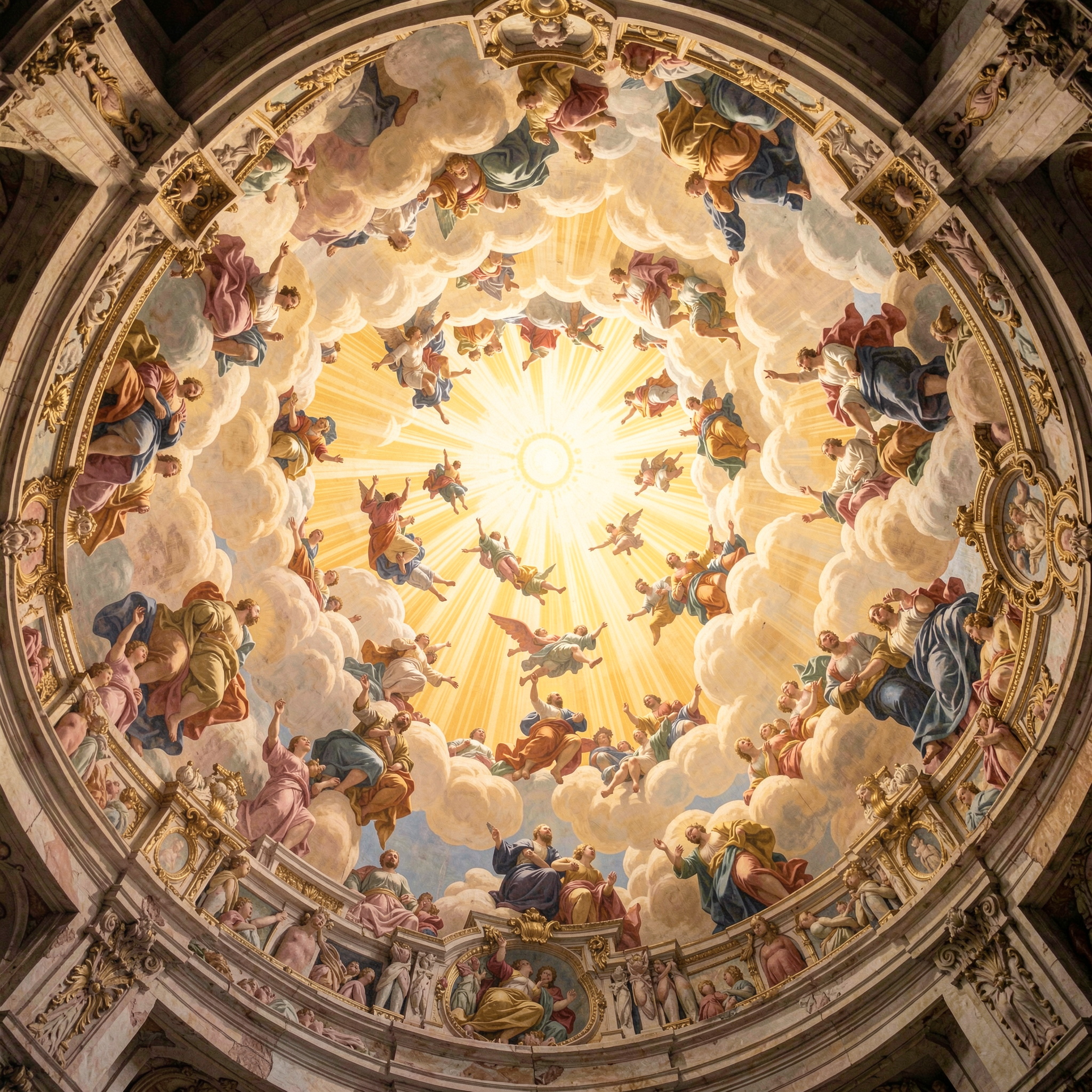
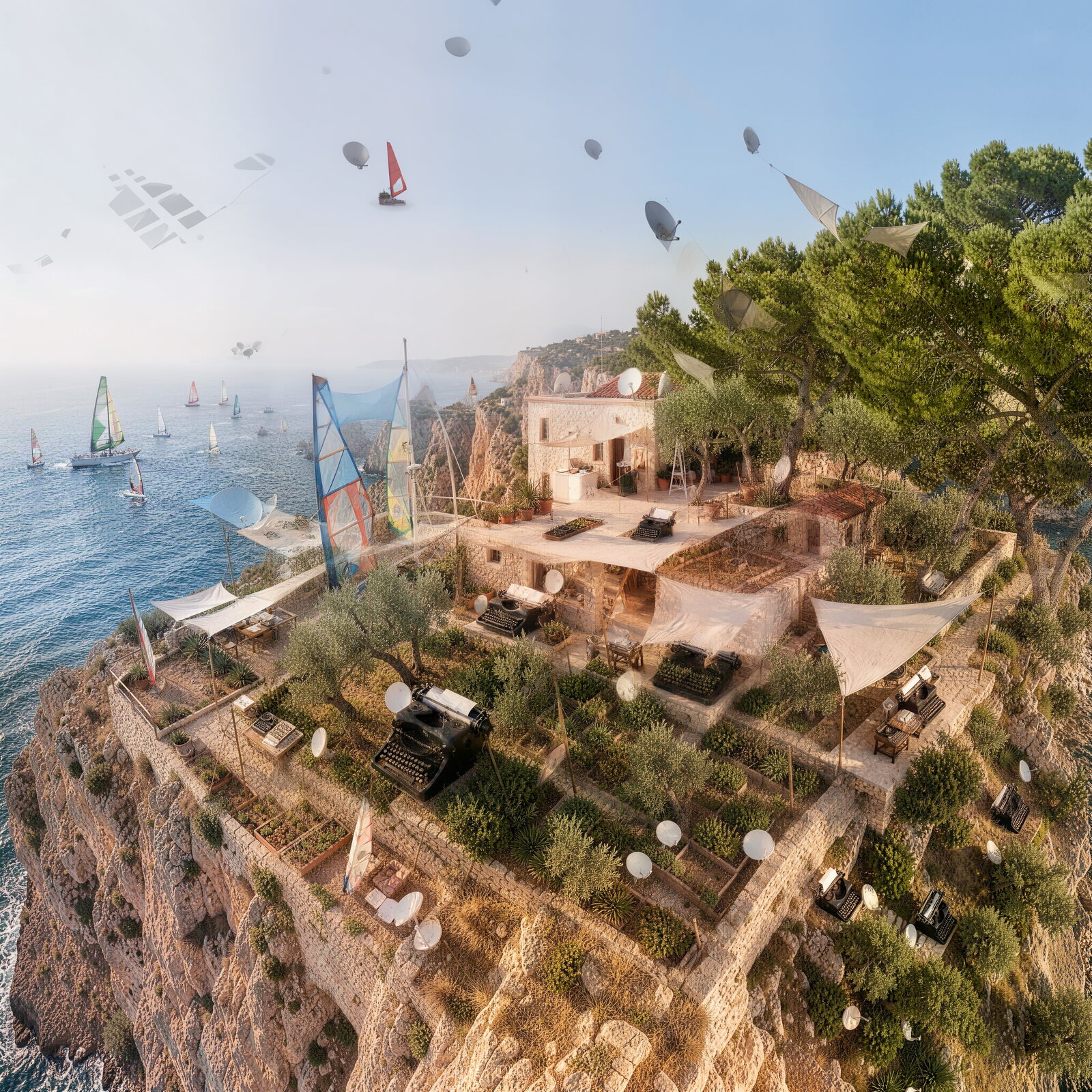
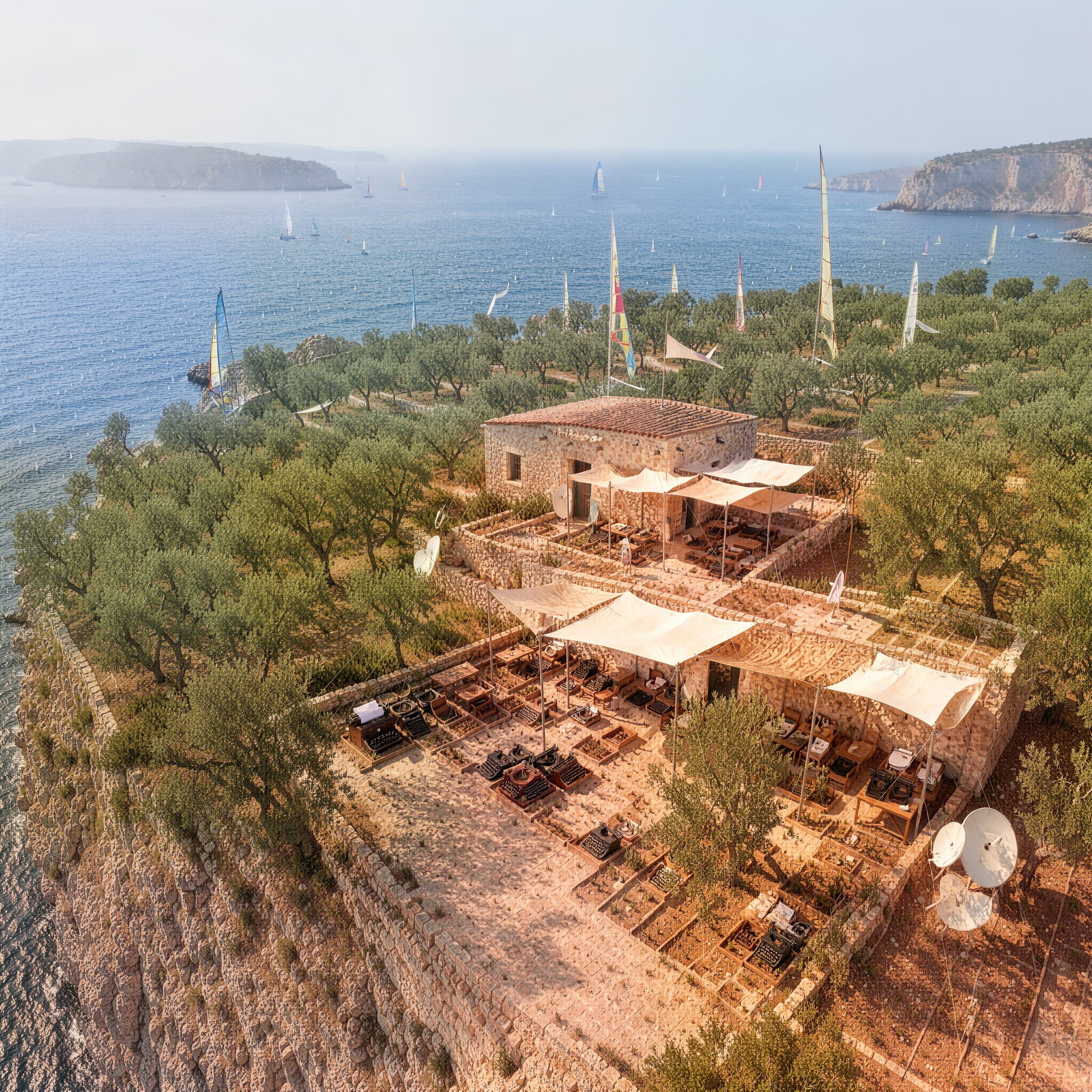
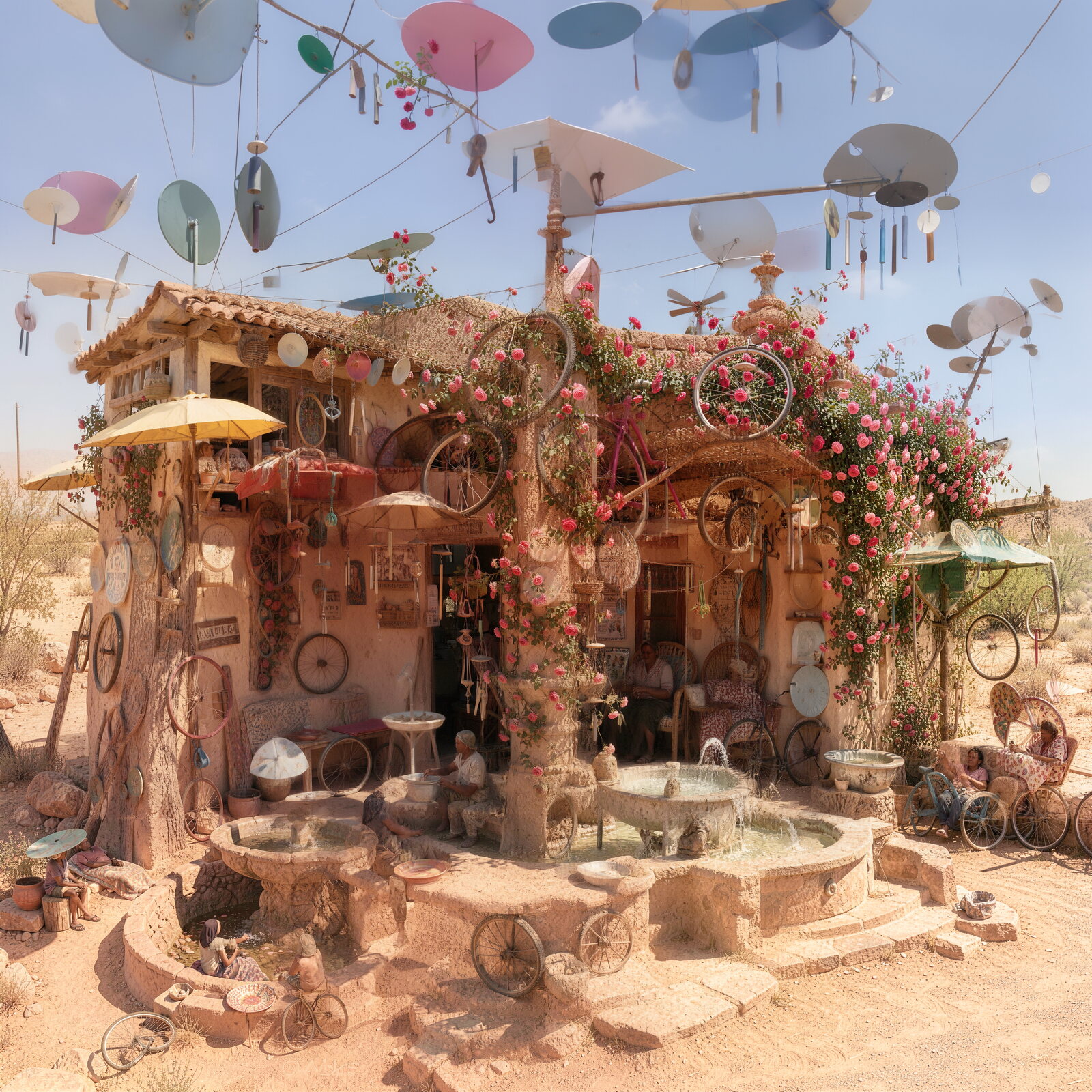
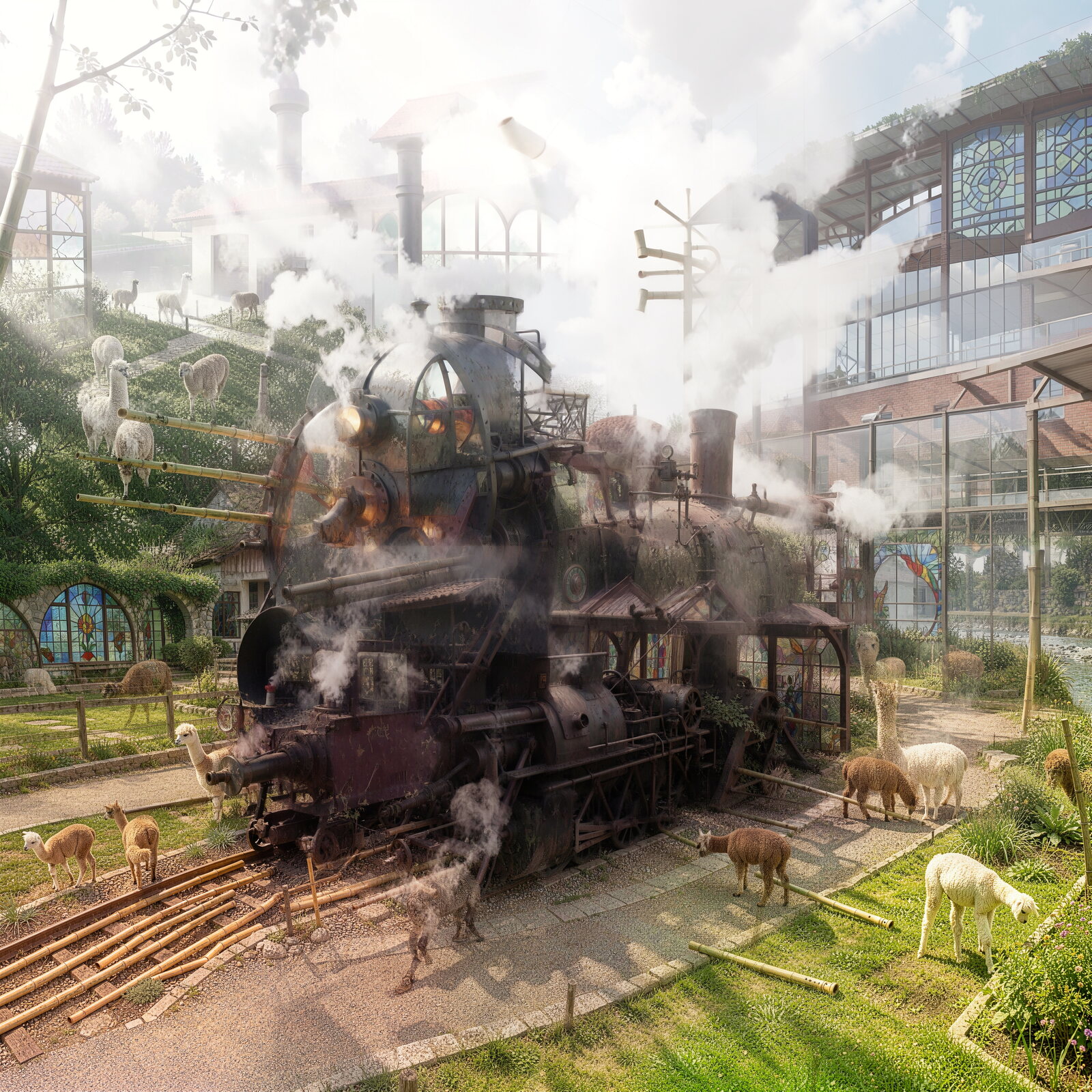
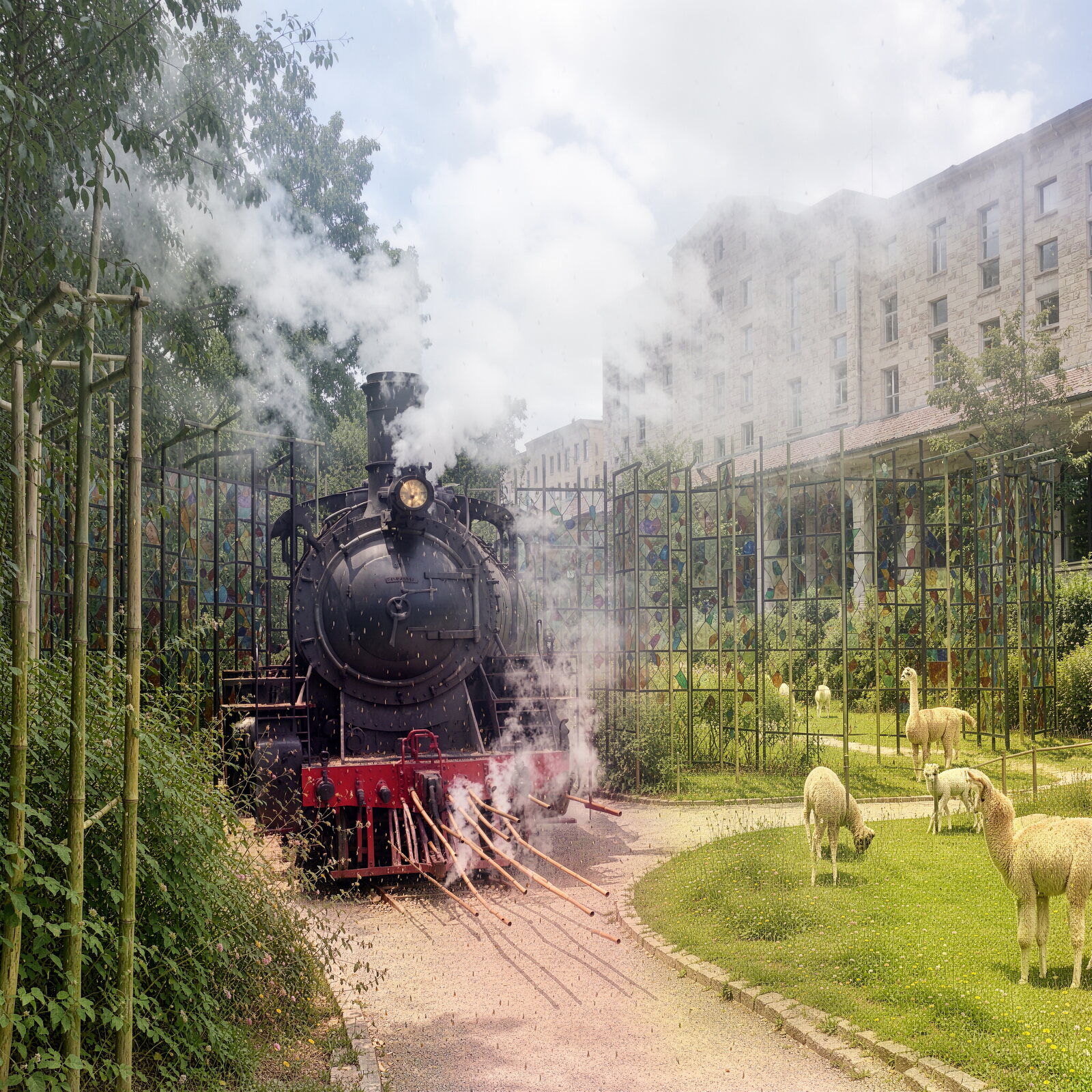
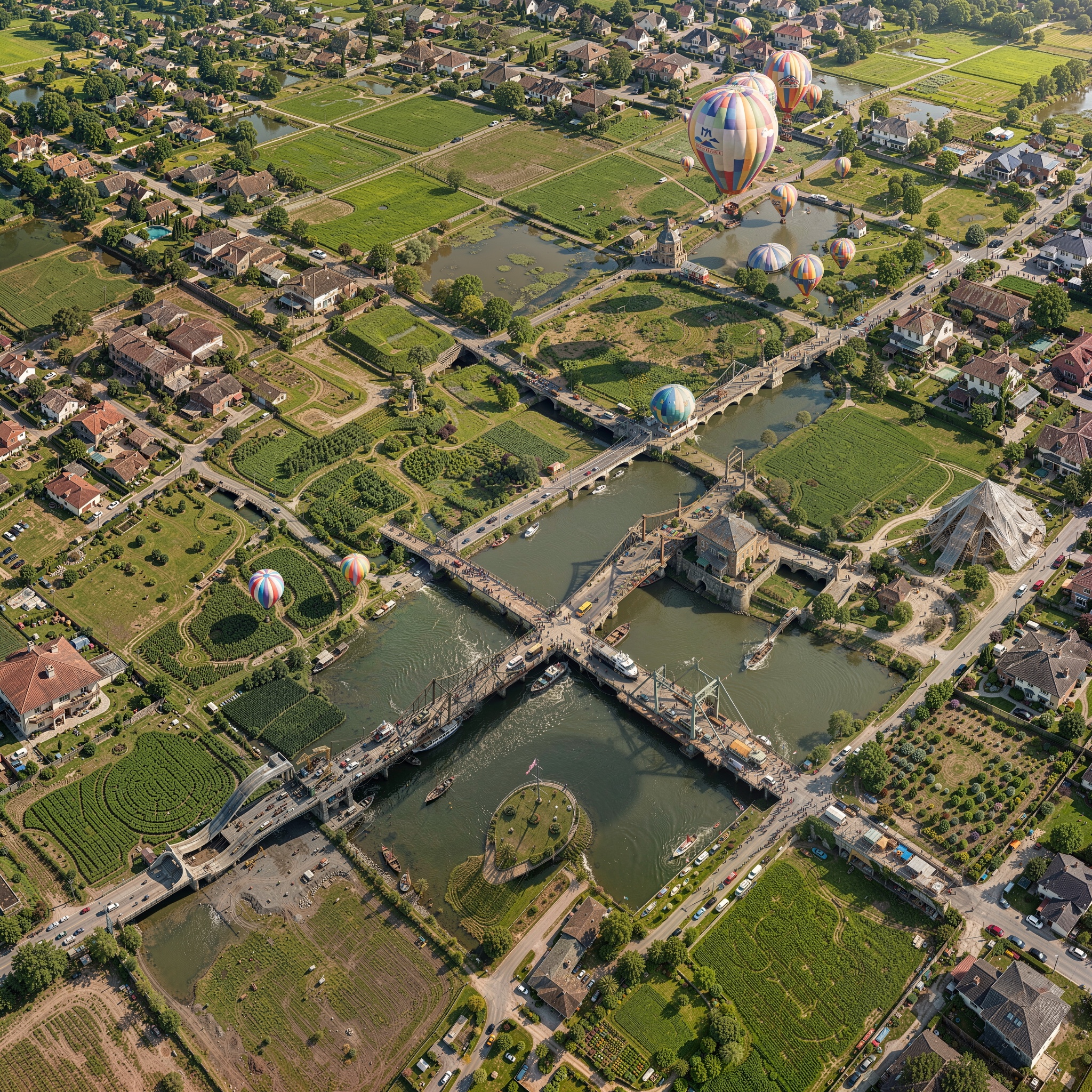
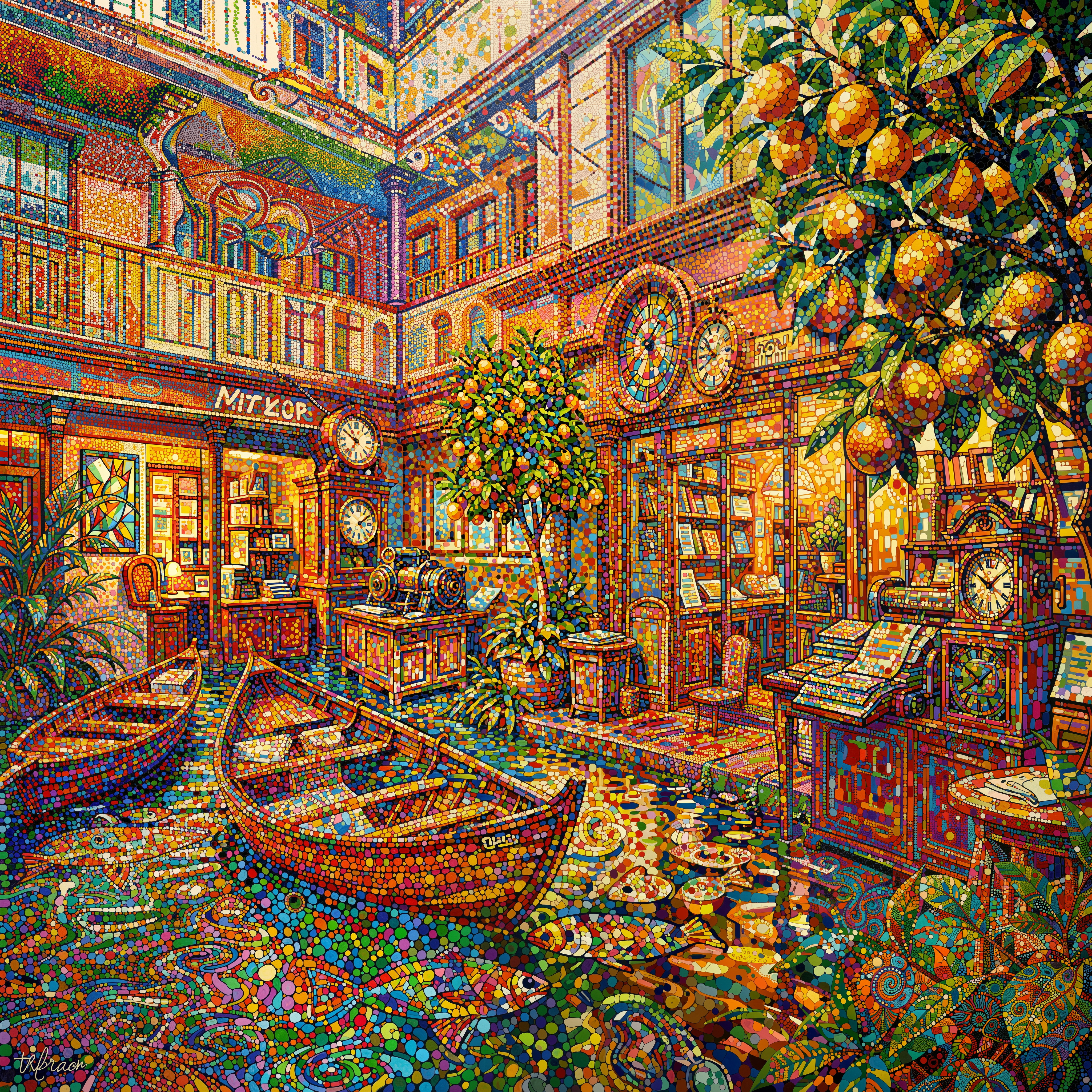
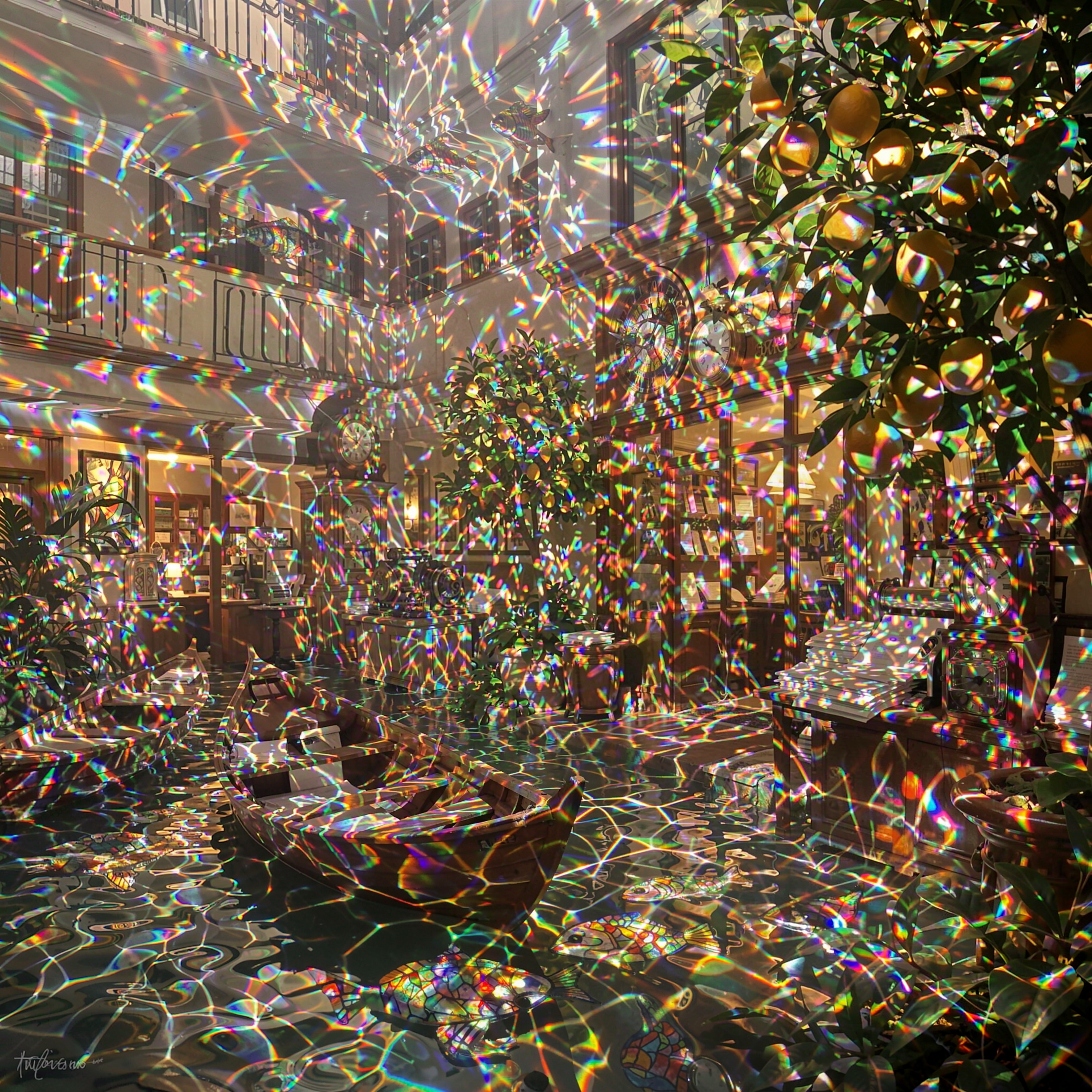
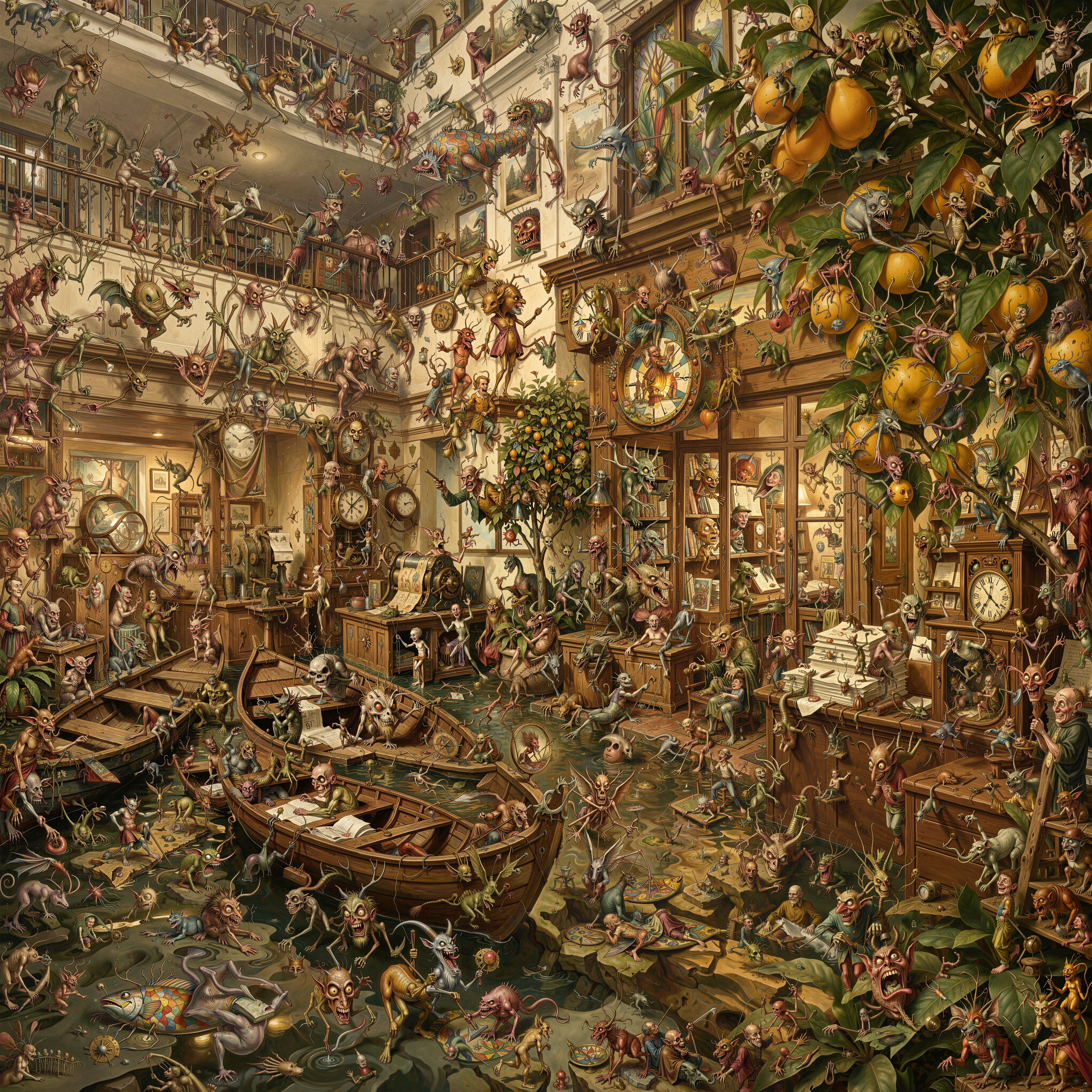
Hover either image to compare the same area, then scroll over it to change the magnification. Move the pointer away from the image to resume page scrolling.Tap an image to activate the linked lens, drag with one finger to compare, and pinch with two fingers to magnify. Tap outside the comparison to resume page gestures.
Controllable high-resolution generation. The master prompt establishes the scene; the detail prompt and feedback strength α control local density and style while JoLT preserves a coherent global composition.
Figure 1 setup. FLUX.2 Klein-9B, four denoising steps, and a fixed seed. The base view is generated at 2048². JoLT produces 4096² with 1024² high-resolution windows, 512 px stride, and α = 0.25.
Abstract
Text-to-image models produce impressive results but still struggle with densely detailed high-resolution images. Existing methods usually generate a low-resolution image first, then upscale or refine it, so high-resolution information cannot influence the global composition as it forms.
We introduce Joint Latent Trajectories (JoLT), a training-free, two-stream generator that jointly denoises low- and high-resolution latent images at each sampling step. The low-resolution trajectory controls overall layout; the tiled high-resolution trajectory adds local detail. Bidirectional exchange keeps both streams synchronized and exposes two direct creative controls: a detail prompt and feedback strength α. The resulting 4096² images are richly detailed while remaining globally coherent.
Method
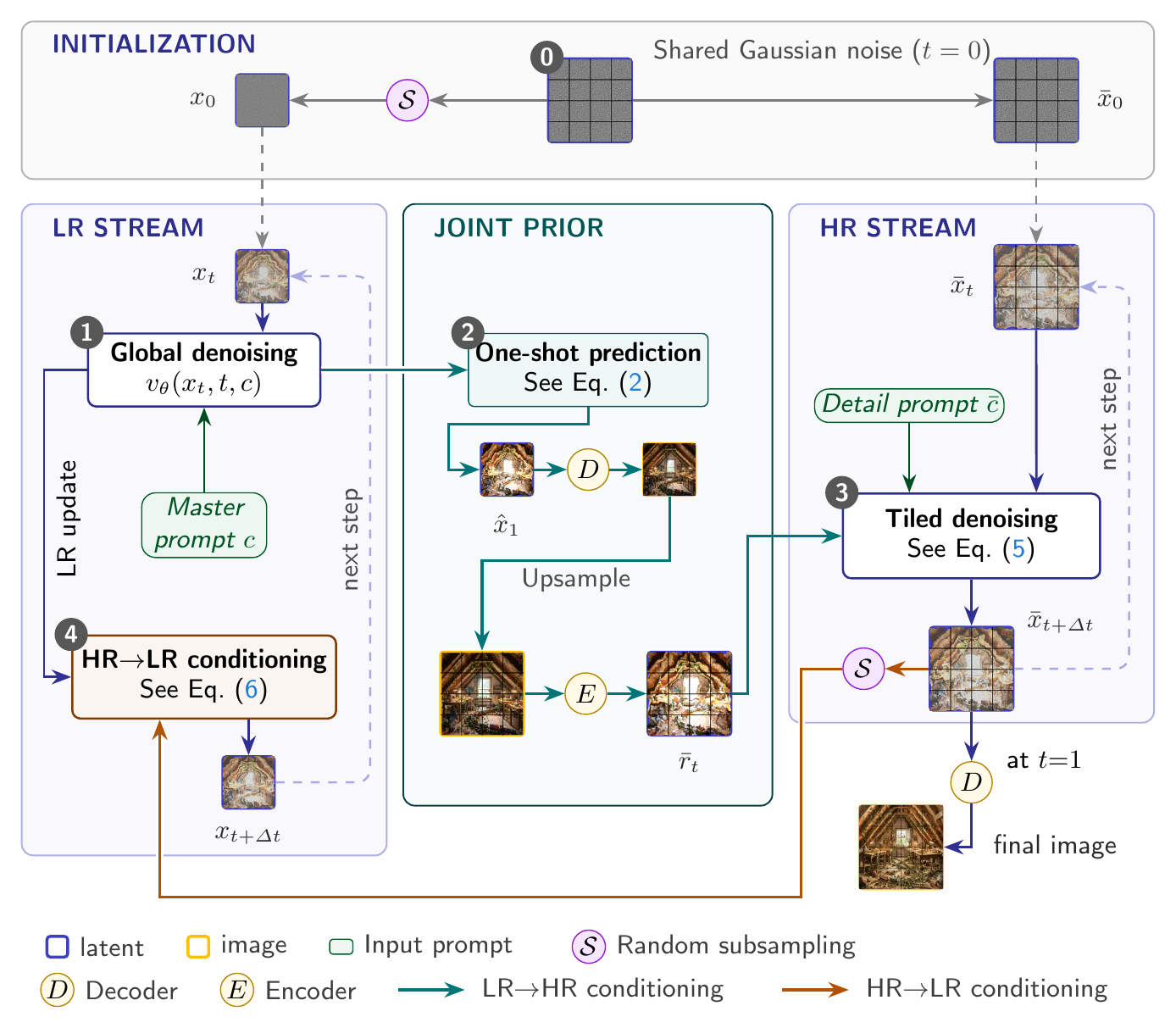
JoLT keeps a global trajectory and a tiled detail trajectory alive together. At every denoising step, each stream updates the other before sampling continues.
The complete JoLT pipeline from the paper. A shared Gaussian draw initializes both trajectories. The LR stream denoises the global composition from the master prompt; its clean estimate is decoded, upsampled, and re-encoded as the joint prior for tiled HR denoising. The HR canvas is then randomly subsampled and blended into the next LR update with weight α.Tap the diagram for a pinch-to-zoom view.
Method setup. FLUX.2 Klein-9B distilled to four sampling steps. Unless stated otherwise: 4096² canvas, 1024² tiled denoising windows, 512 px stride (50% overlap), 1024² LR stream, and constant α = 0.25.
Qualitative Comparison
Six matched prompts, four methods, and 24 full-resolution outputs. Use the arrows to browse examples, move the cursor over any image to inspect the same normalized crop across the row, and scroll while hovering to adjust the magnification.Six matched prompts, four methods, and 24 full-resolution outputs. Use the arrows to browse examples, tap any image to activate the linked lens, drag to compare the same area, and pinch to magnify.
JoLT (ours)DemoFusionResDiTSEGA
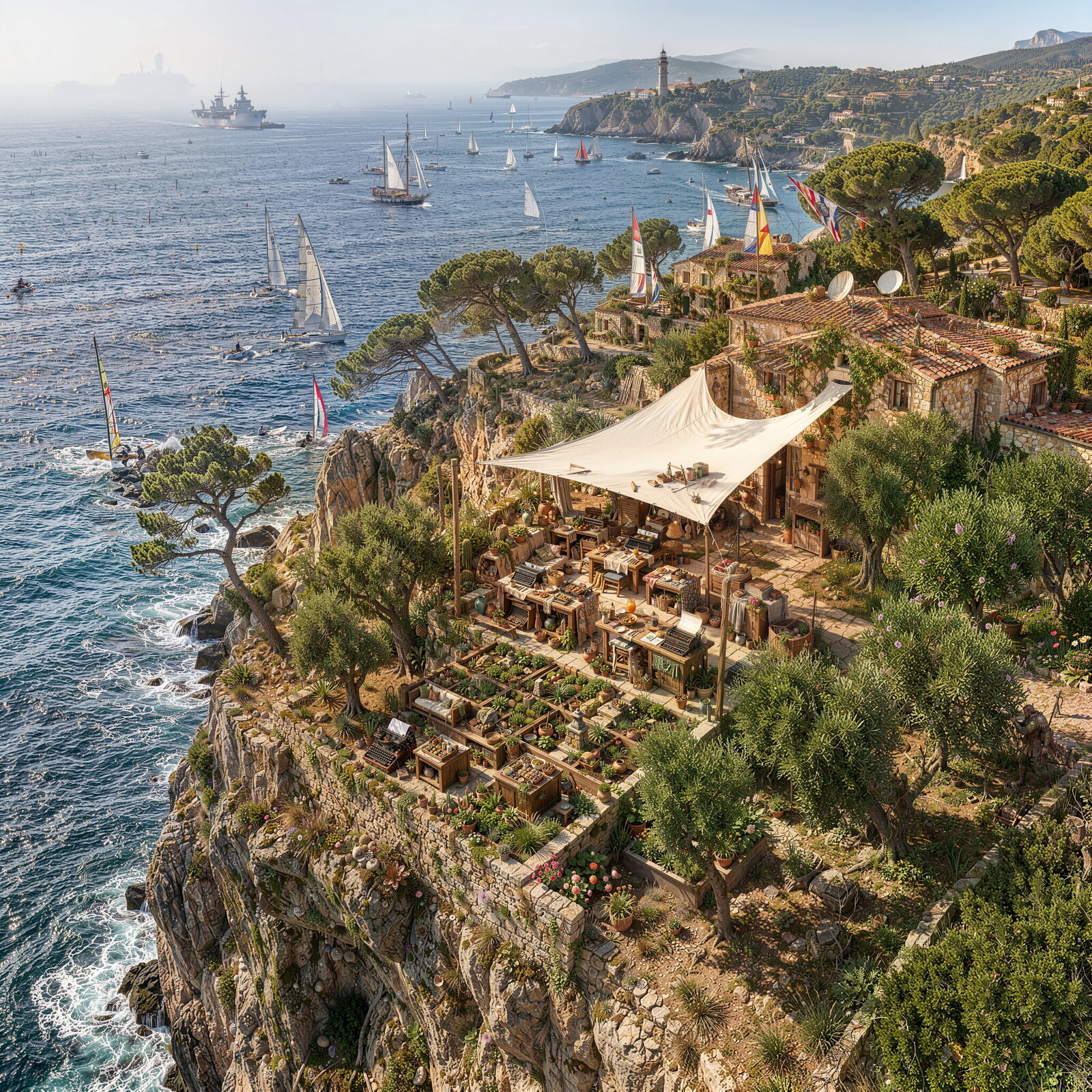
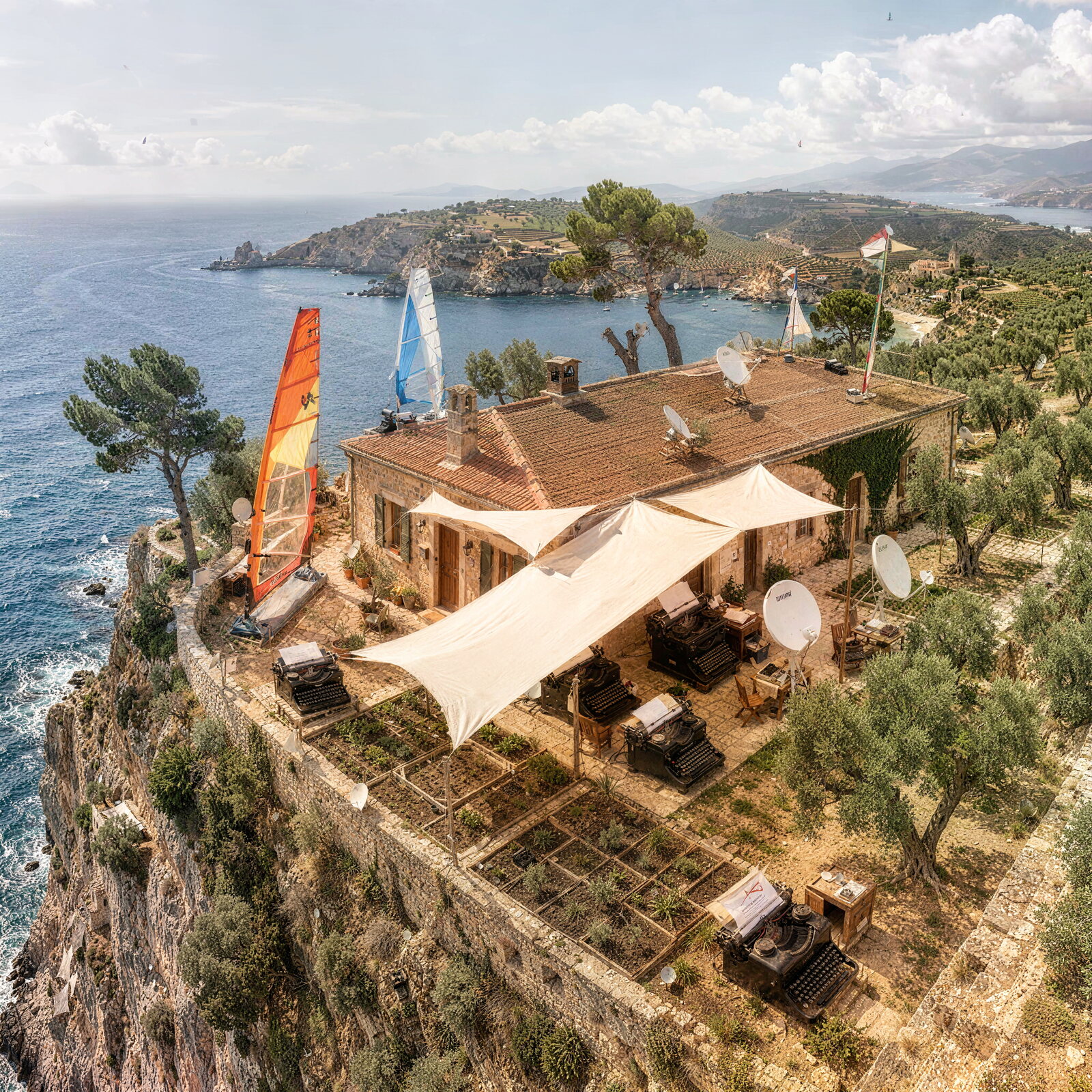
Example 1
PromptViewed from a cliff, a coastal monastery combines windsurfing sails, antique typewriters, olive groves, and satellite dishes into one functioning landscape; sailcloth shades the writing terraces, typewriter keys map the planting grid, and dishes pivot in rhythm with the wind-bent trees.
JoLT
DemoFusion
ResDiT
SEGA
Example 2
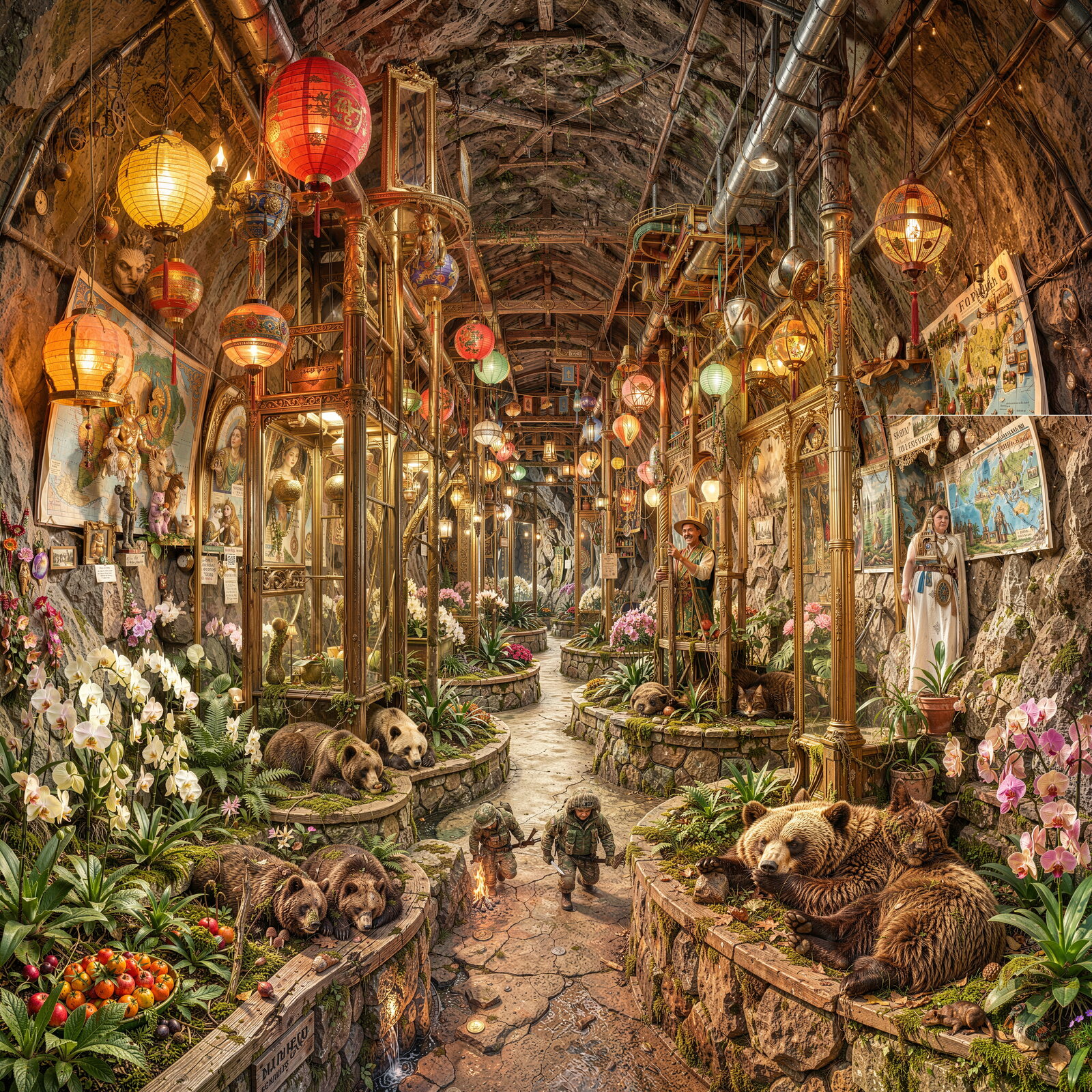
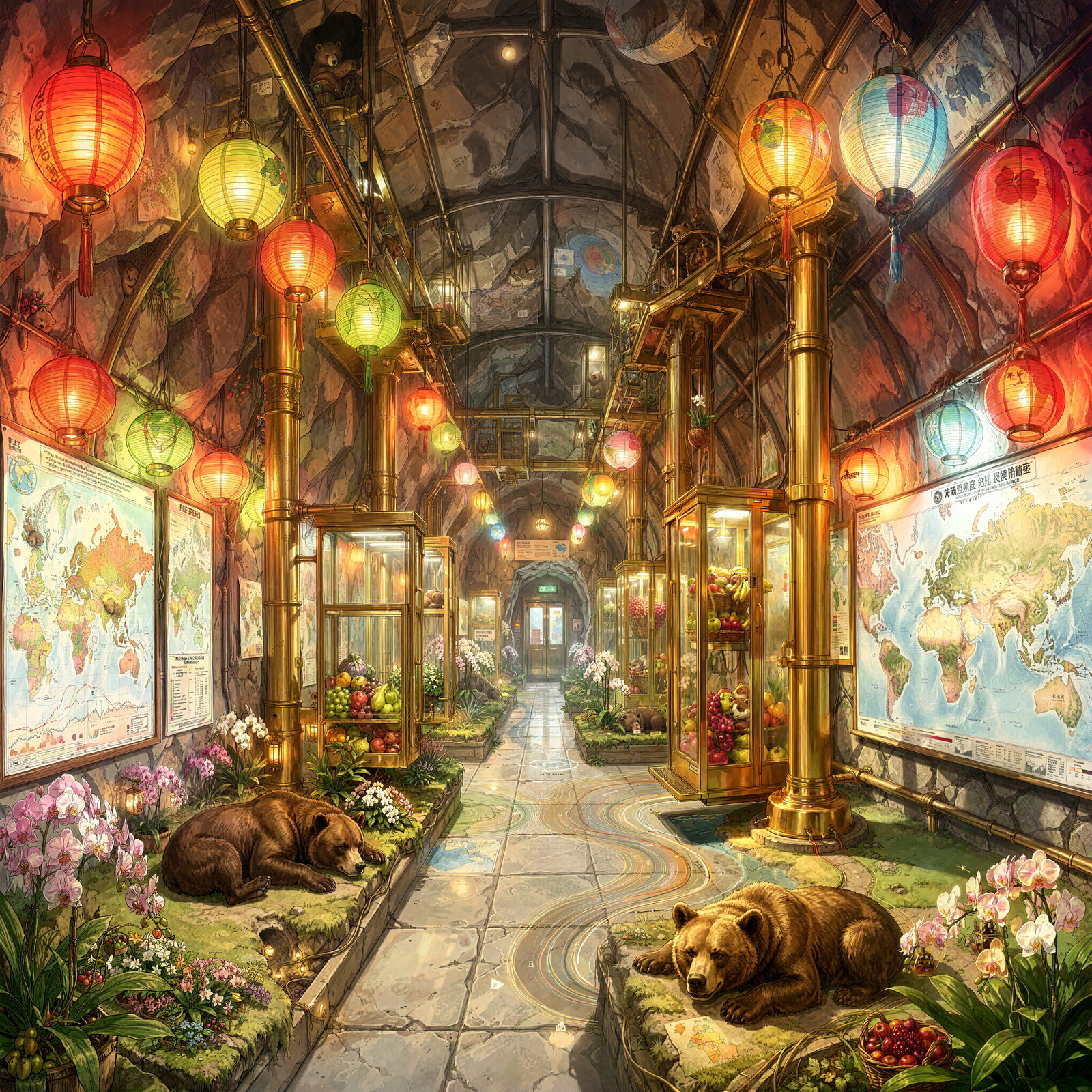
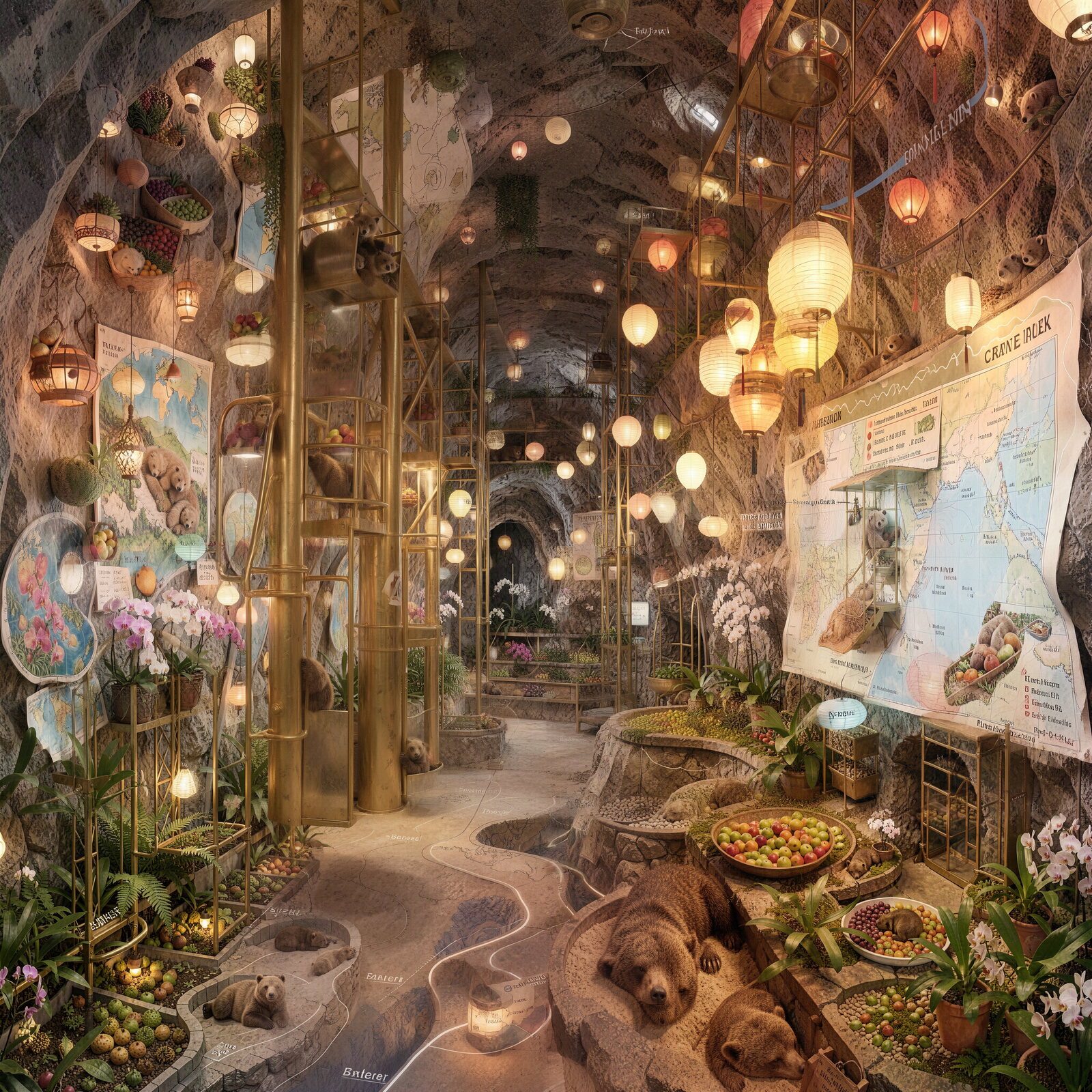
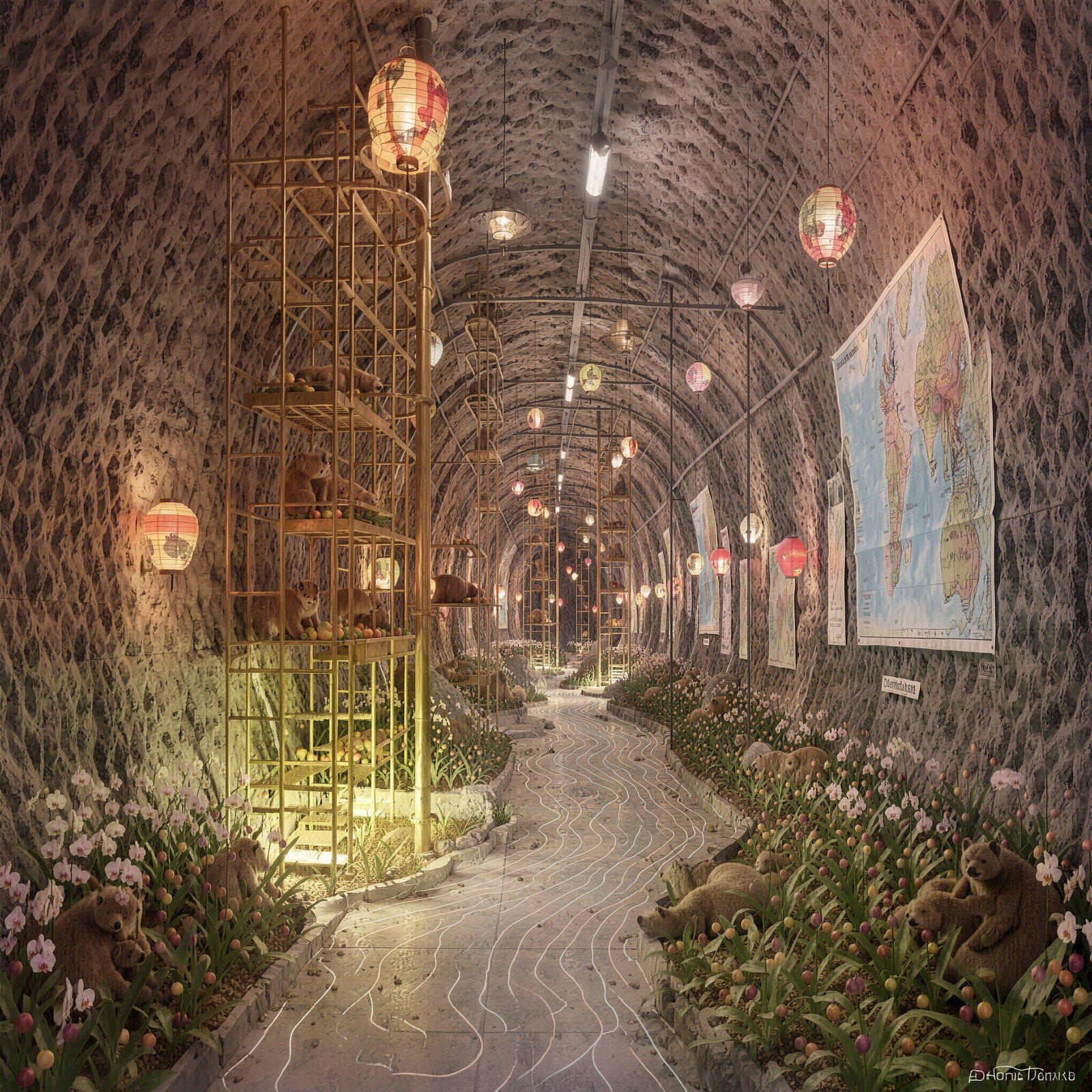
PromptA mountain tunnel becomes an indoor orchard with brass elevators, paper lanterns, weather maps, and sleeping bears; elevators transport fruit, lanterns indicate temperature zones, and map contours guide the planting beds.
JoLT
DemoFusion
ResDiT
SEGA
Example 3
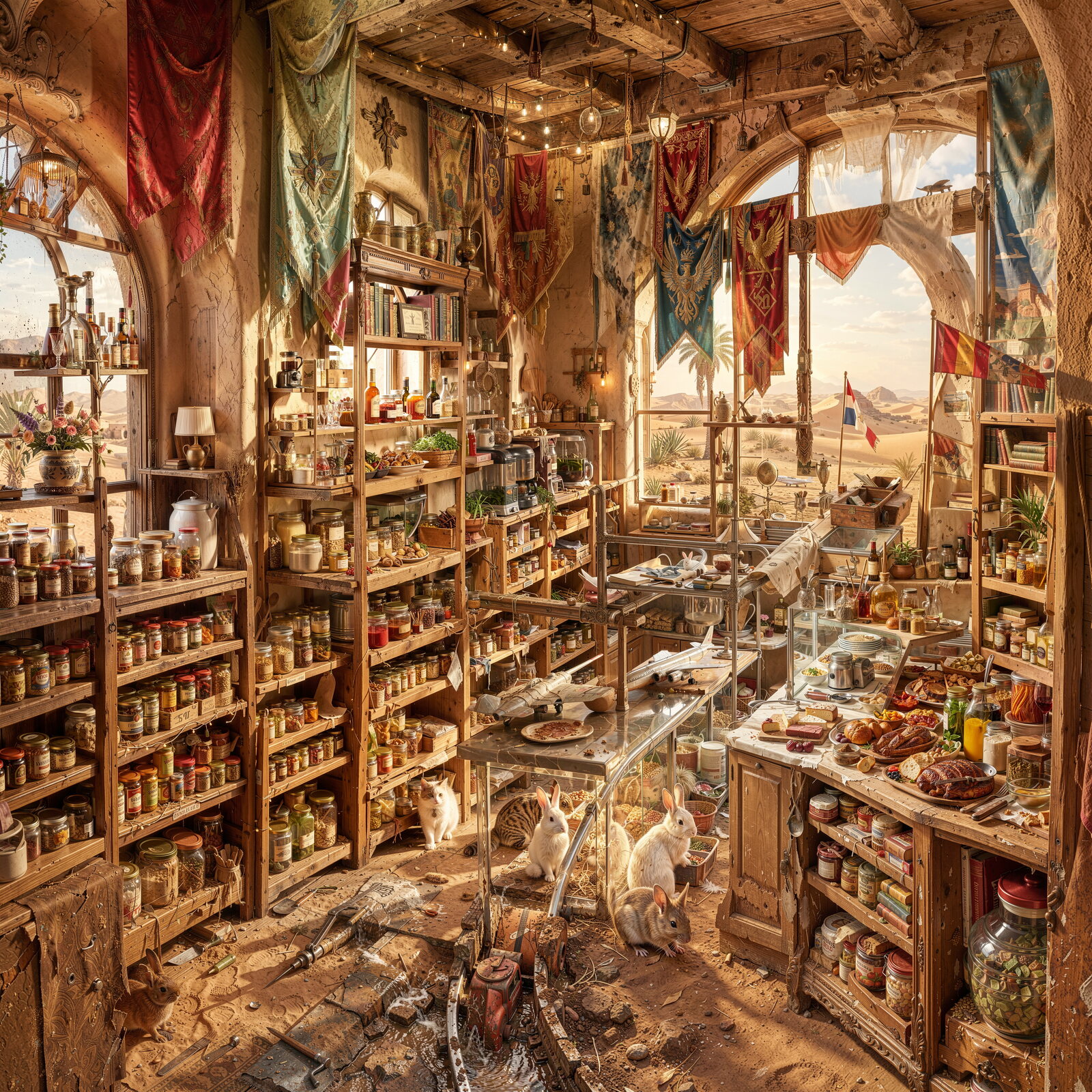
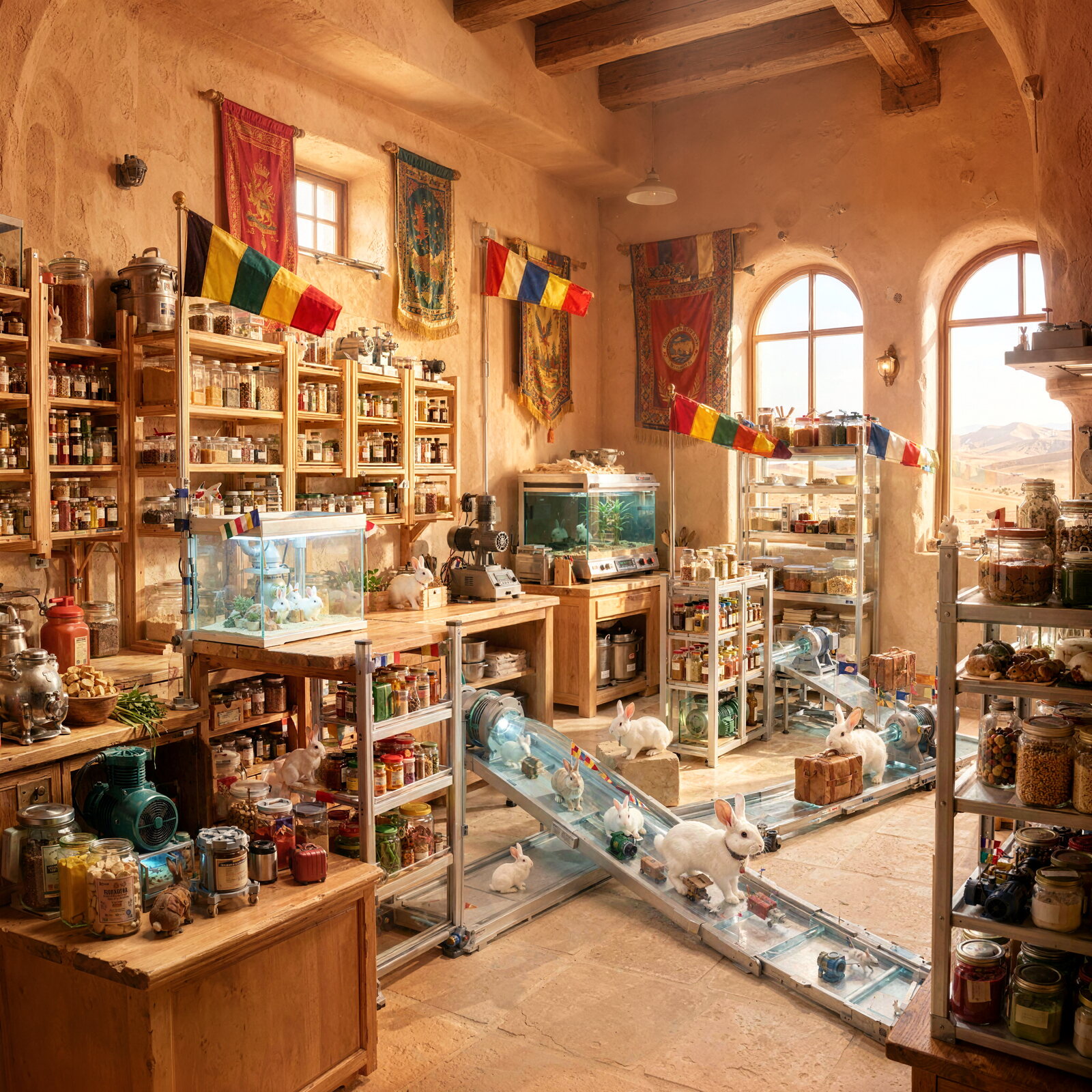
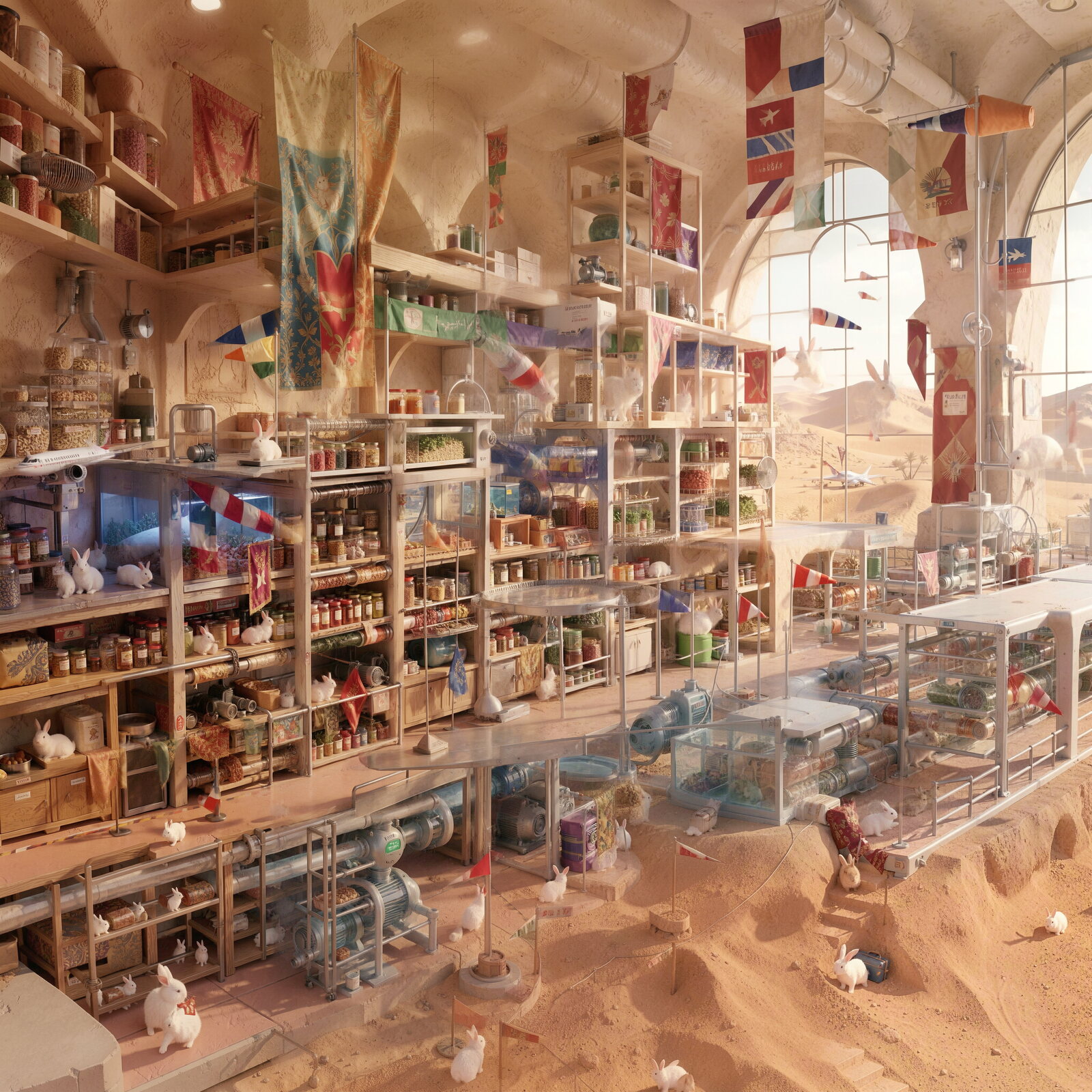
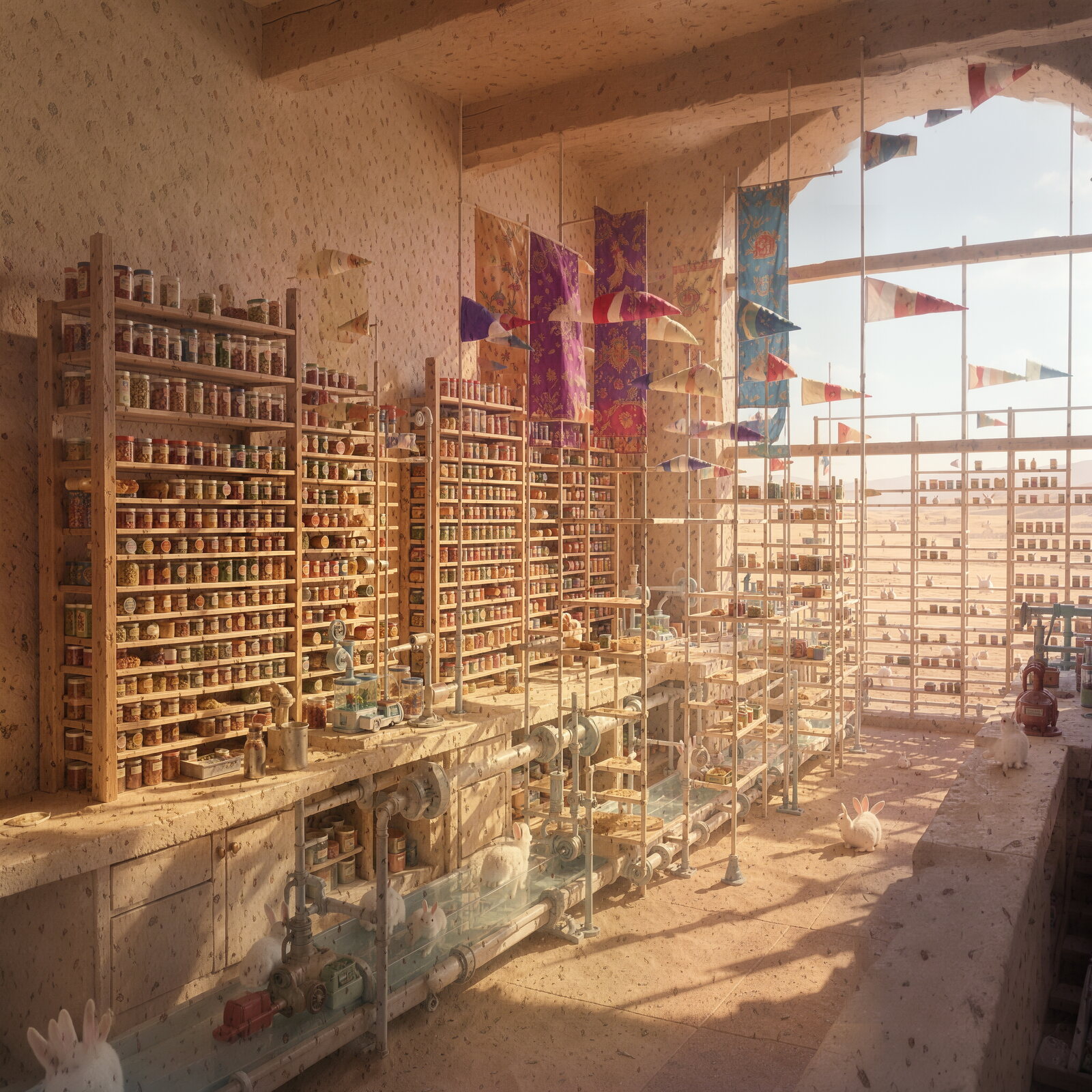
PromptA desert palace kitchen contains a miniature airport assembled from spice racks, silk banners, aquarium pumps, and white rabbits; racks form terminals, banners serve as windsocks, and rabbits move luggage through pump-cooled tunnels.
JoLT
DemoFusion
ResDiT
SEGA
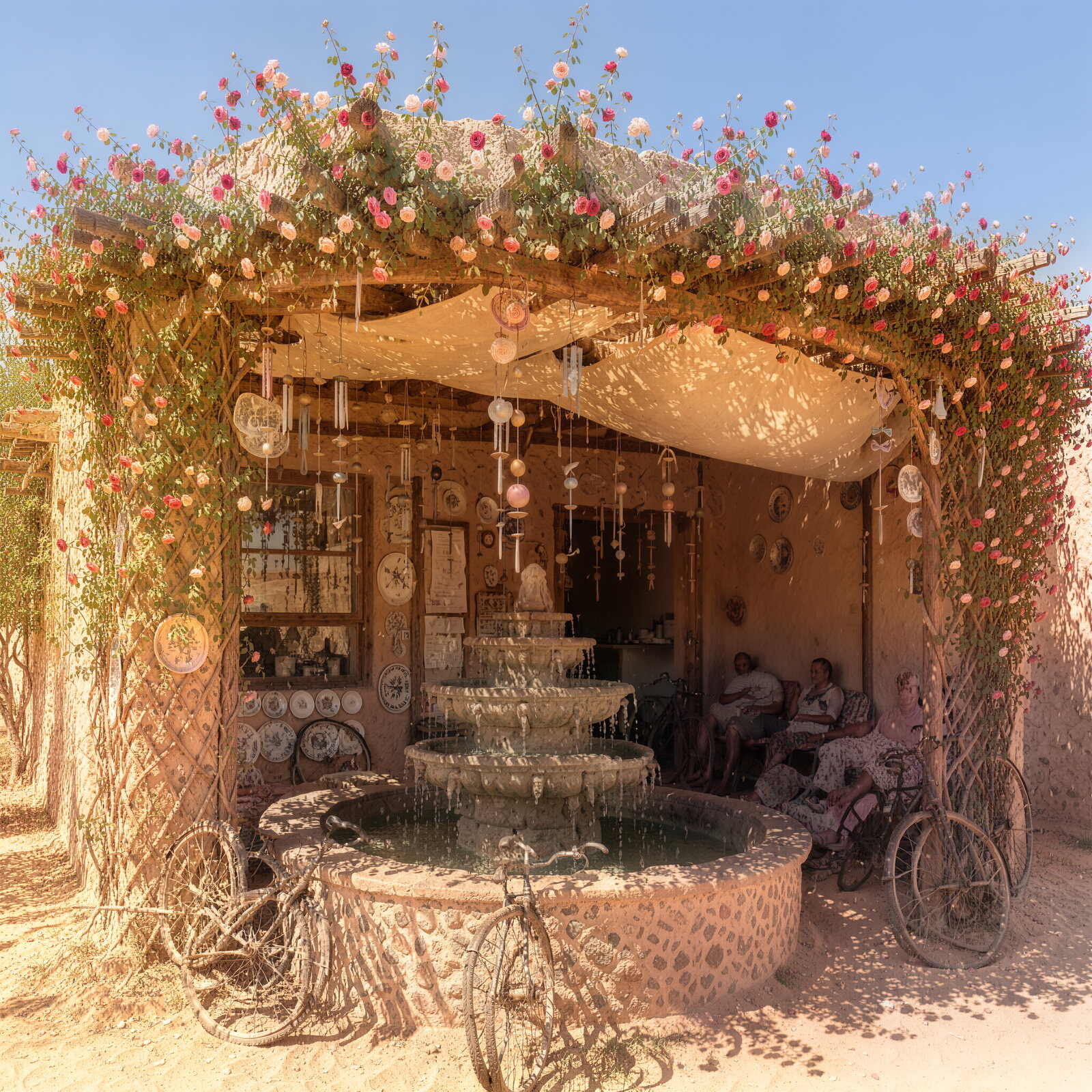
Example 4
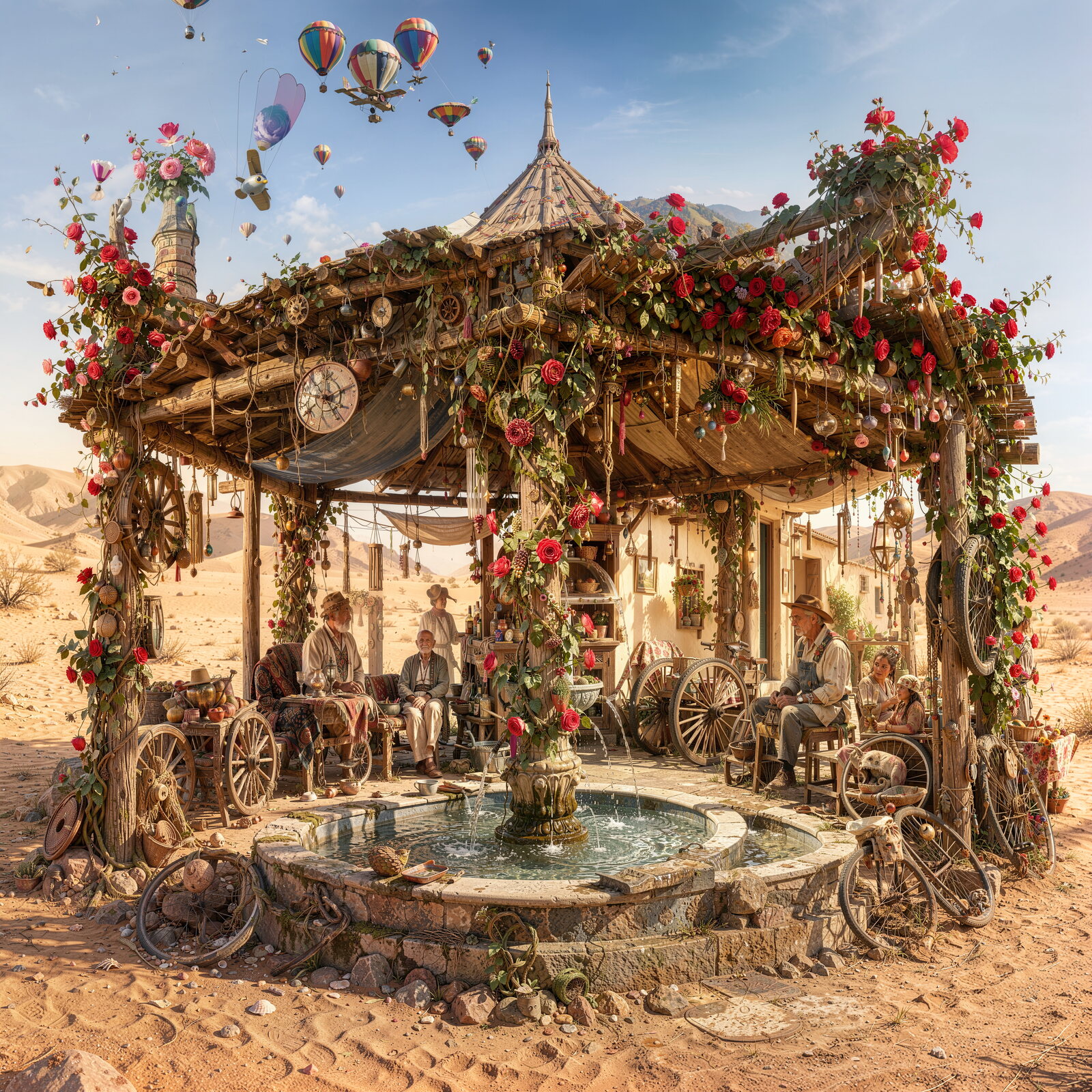
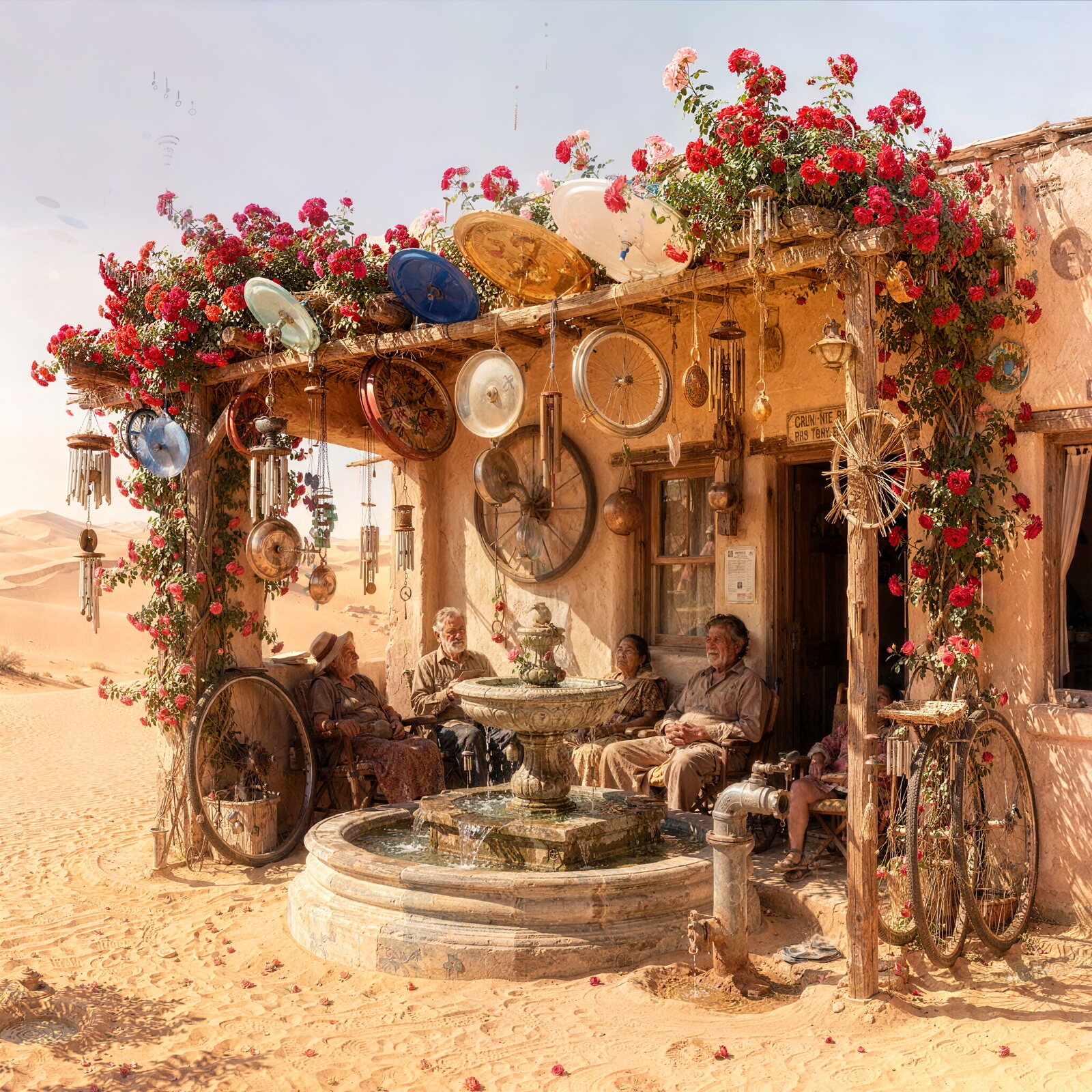
PromptA desert clinic is built around a ceremonial fountain with x-ray plates, wind chimes, climbing roses, and bicycle wheels; plates shade the patients, wheels pump water, and chimes ring as roses turn in the breeze.
JoLT
DemoFusion
ResDiT
SEGA
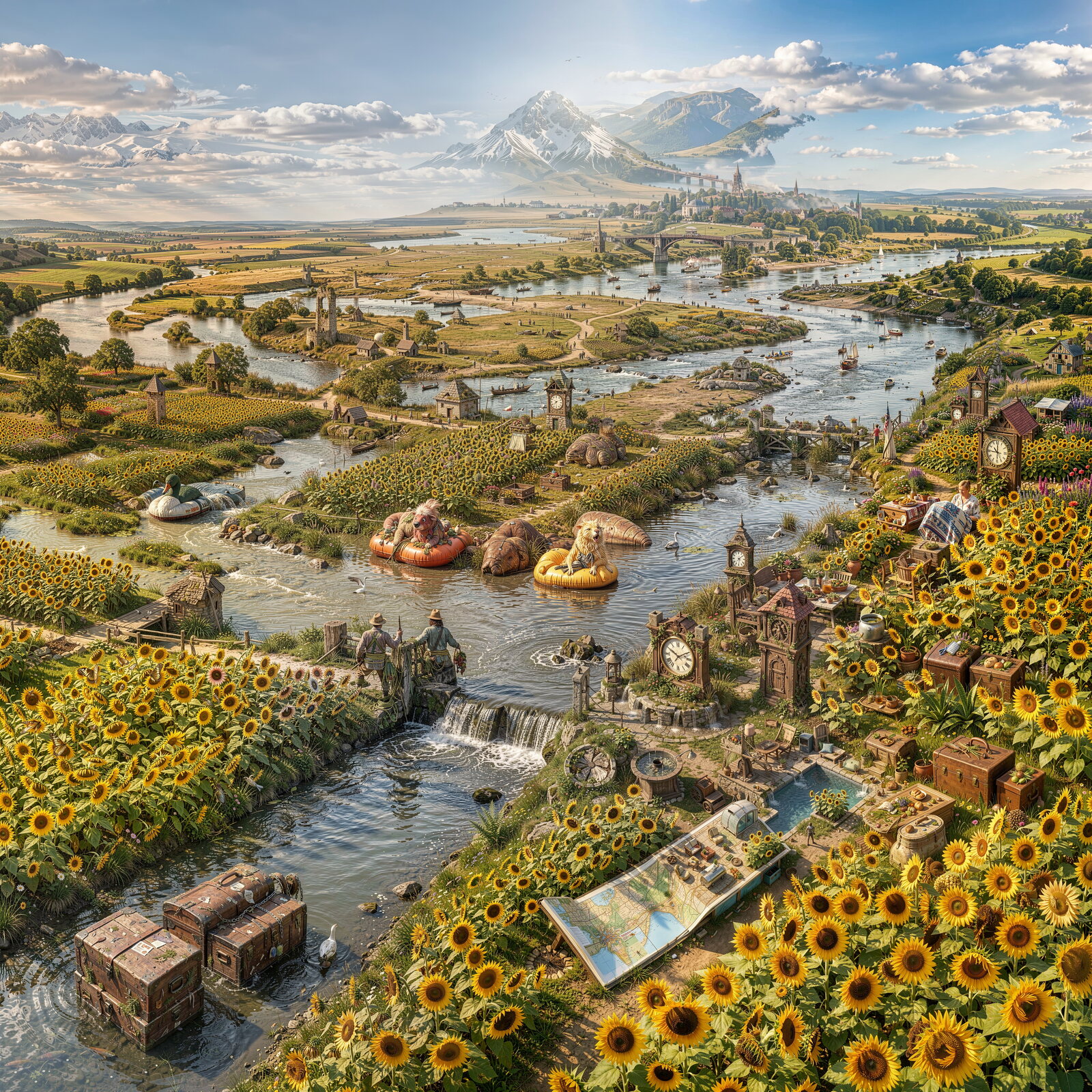
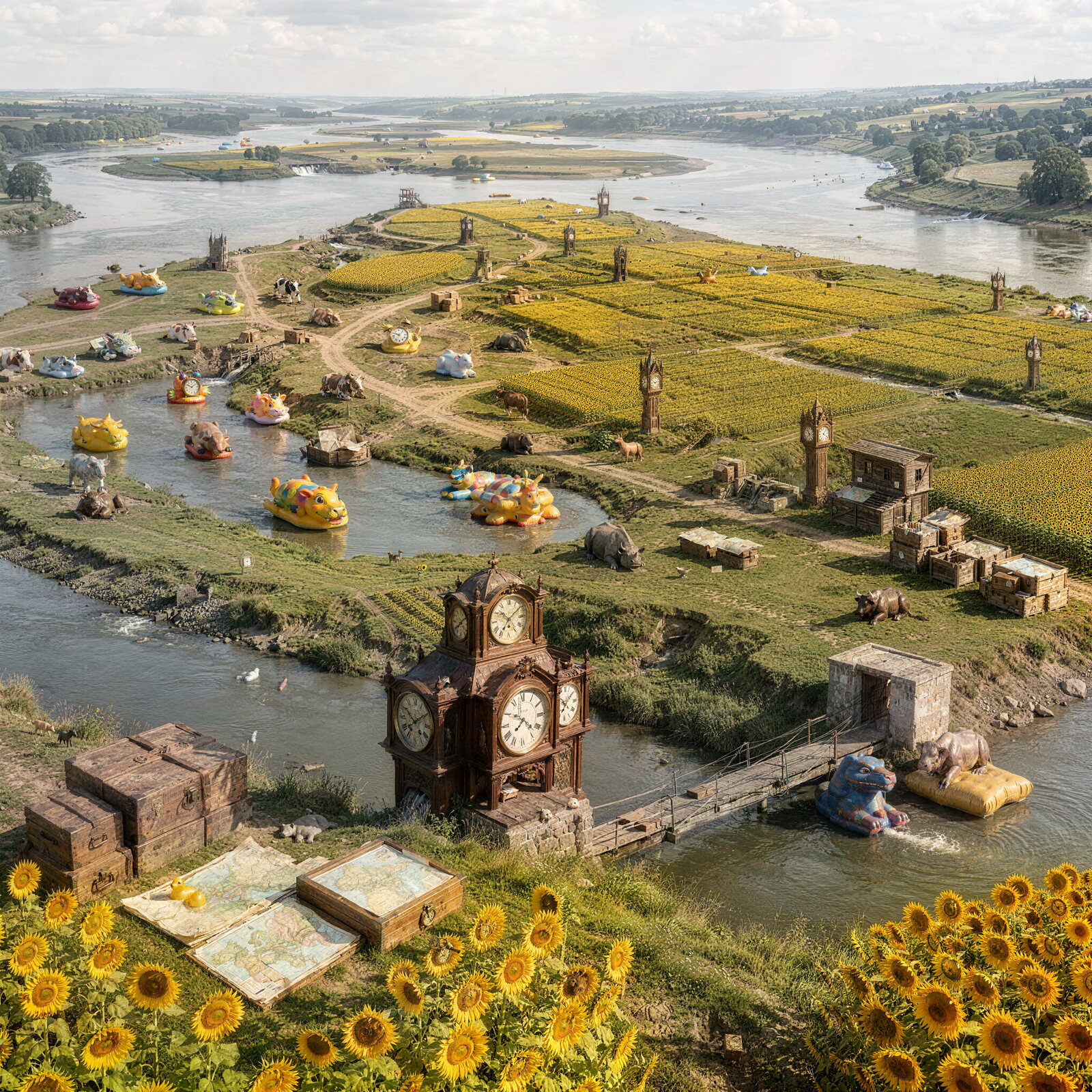
Example 5
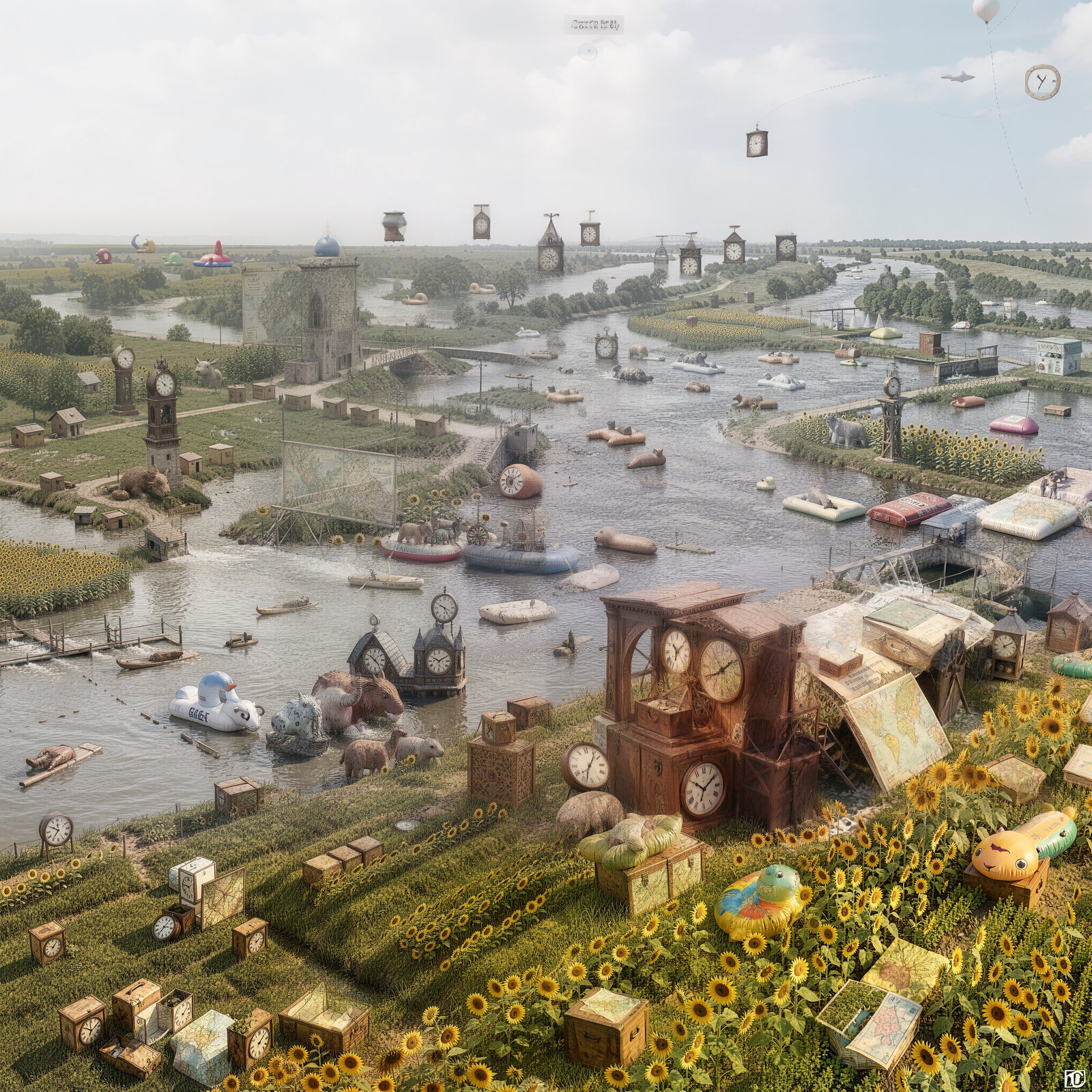
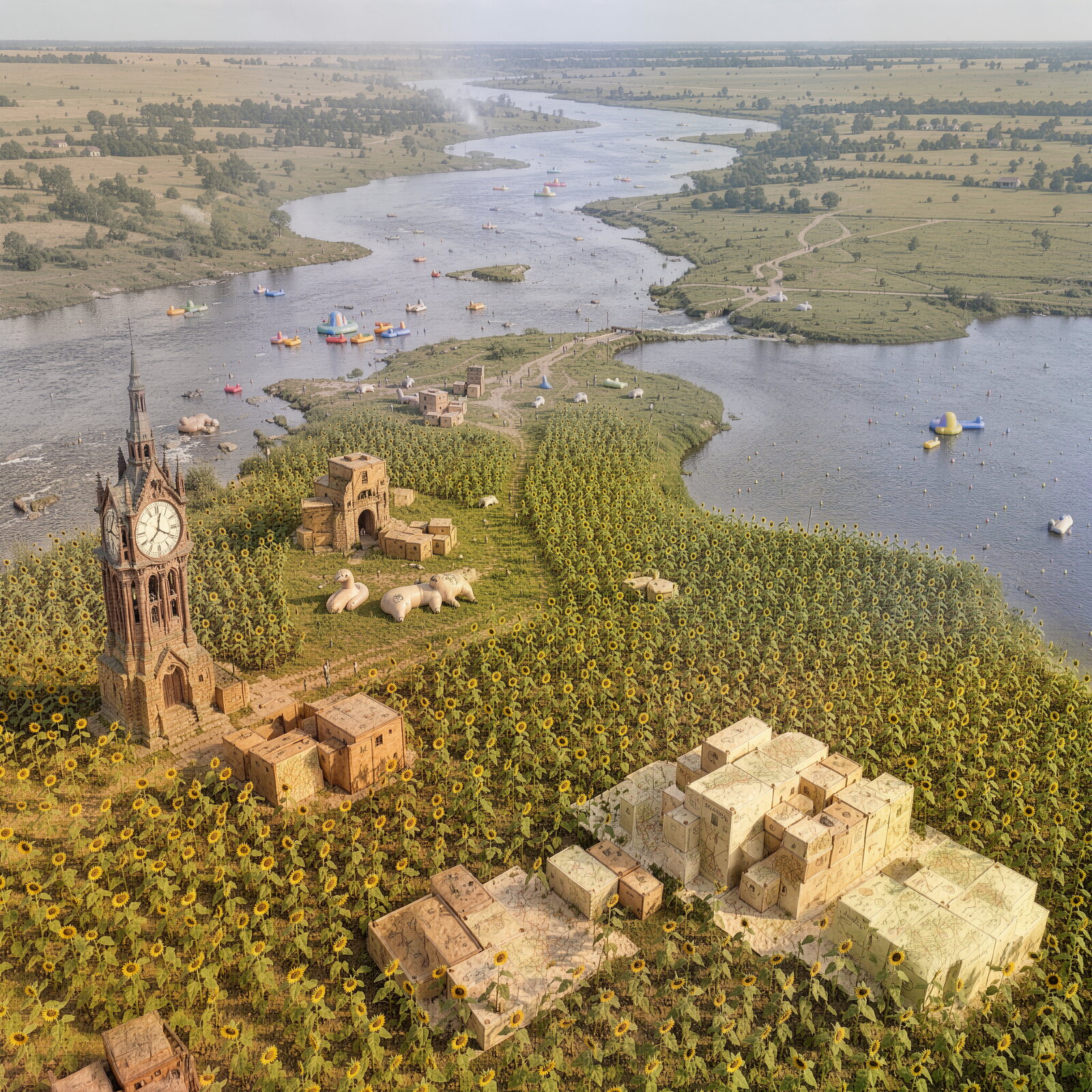
PromptA broad river delta is surveyed using cathedral clocks, inflatable animals, archival boxes, and sunflower fields; clocks regulate the opening of irrigation gates, inflatable forms act as floating markers, and boxes store maps aligned with the flower rows.
JoLT
DemoFusion
ResDiT
SEGA
Example 6
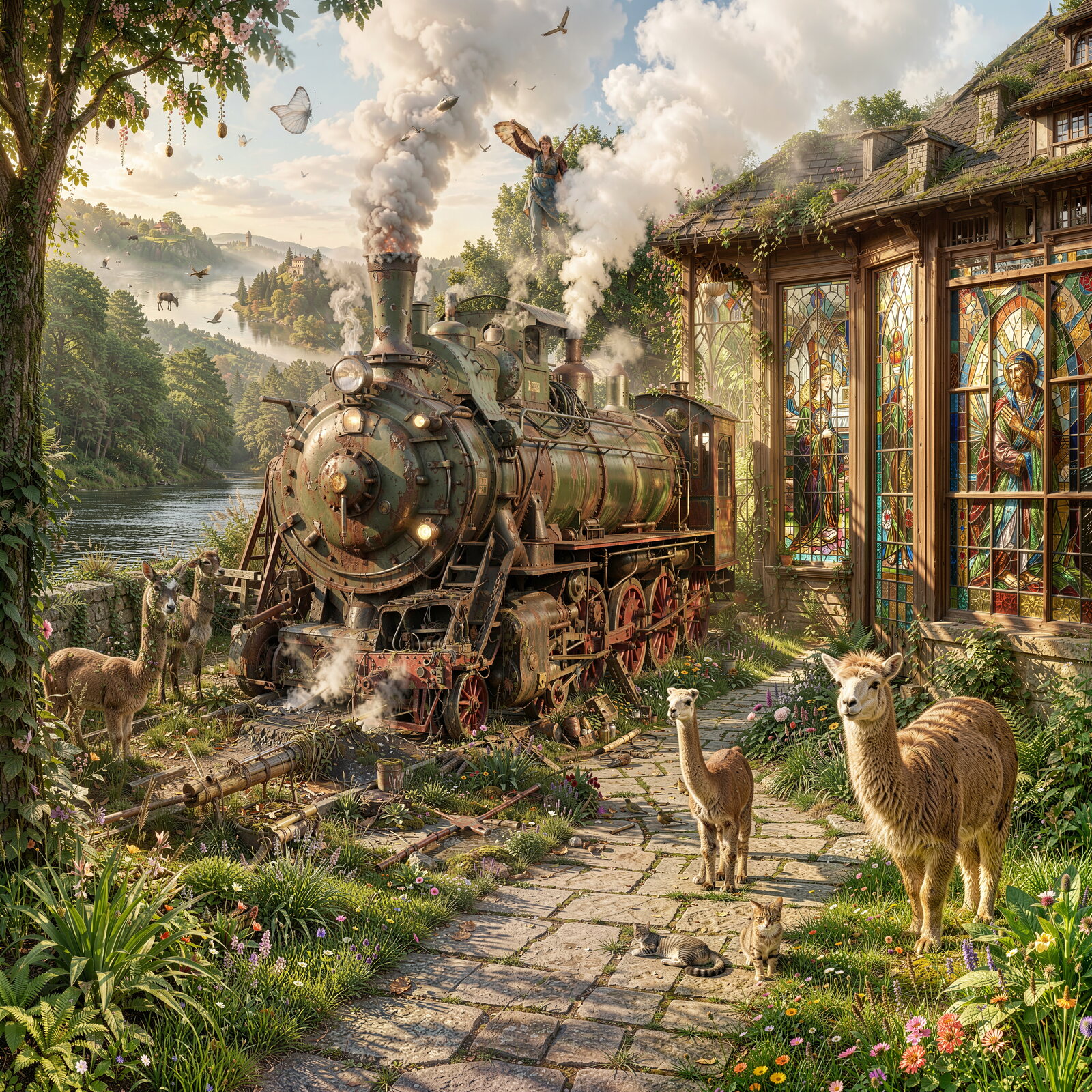
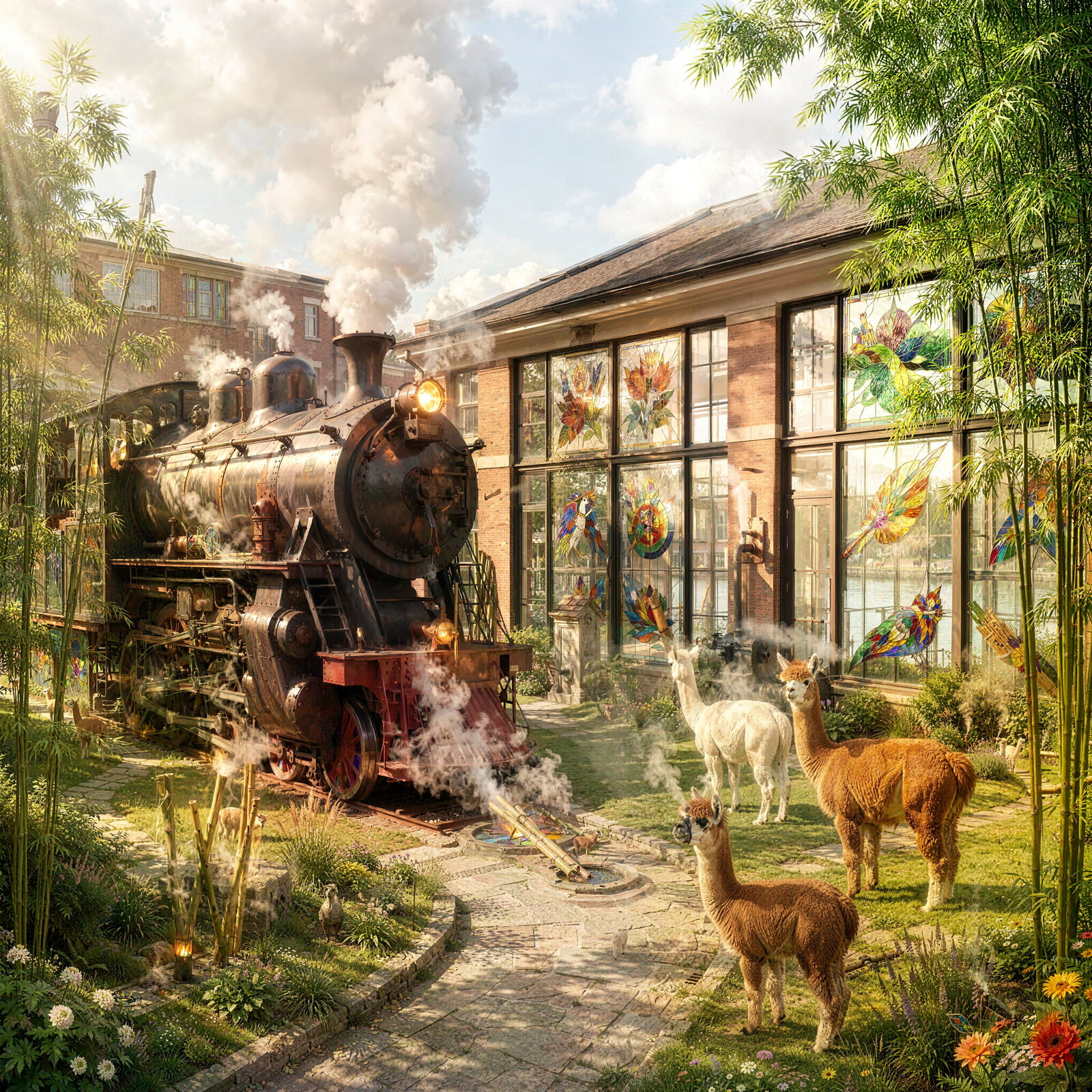
PromptA riverside hospital garden contains a locomotive boiler, stained-glass screens, bamboo flutes, and grazing alpacas; the boiler heats the paths, screens filter the steam, and flutes sound when alpacas cross hidden valves.
JoLT
DemoFusion
ResDiT
SEGA
1 / 6
Comparison setup. Every method uses FLUX.2 Klein-9B with four denoising steps and the same evaluation prompt. Outputs are 4096². JoLT uses joint-prior conditioning, MultiDiffusion aggregation, 1024² windows with 512 px stride, and α = 0.25.
Controlling Complexity with α
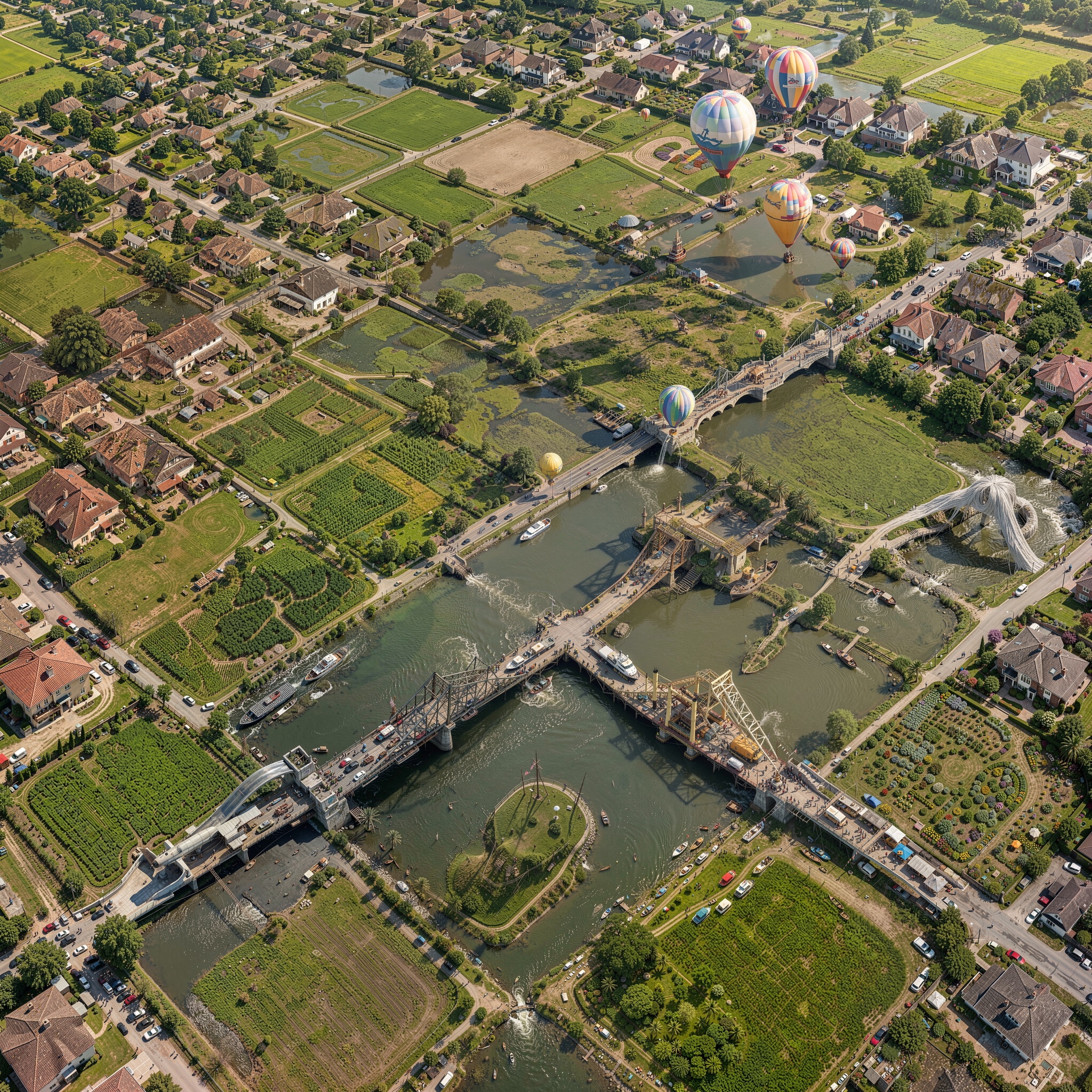
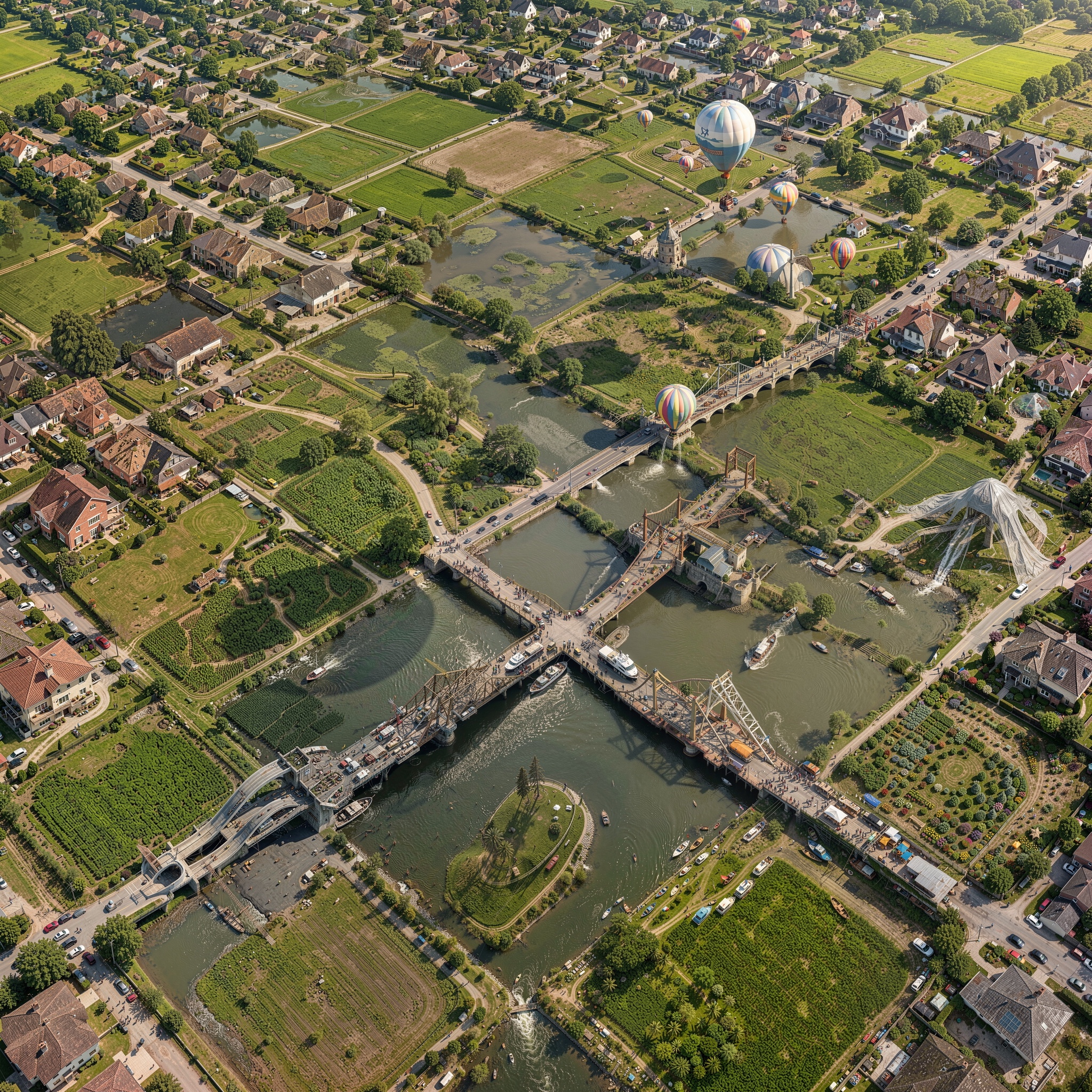
A single feedback strength controls how strongly the evolving high-resolution canvas influences the low-resolution trajectory.
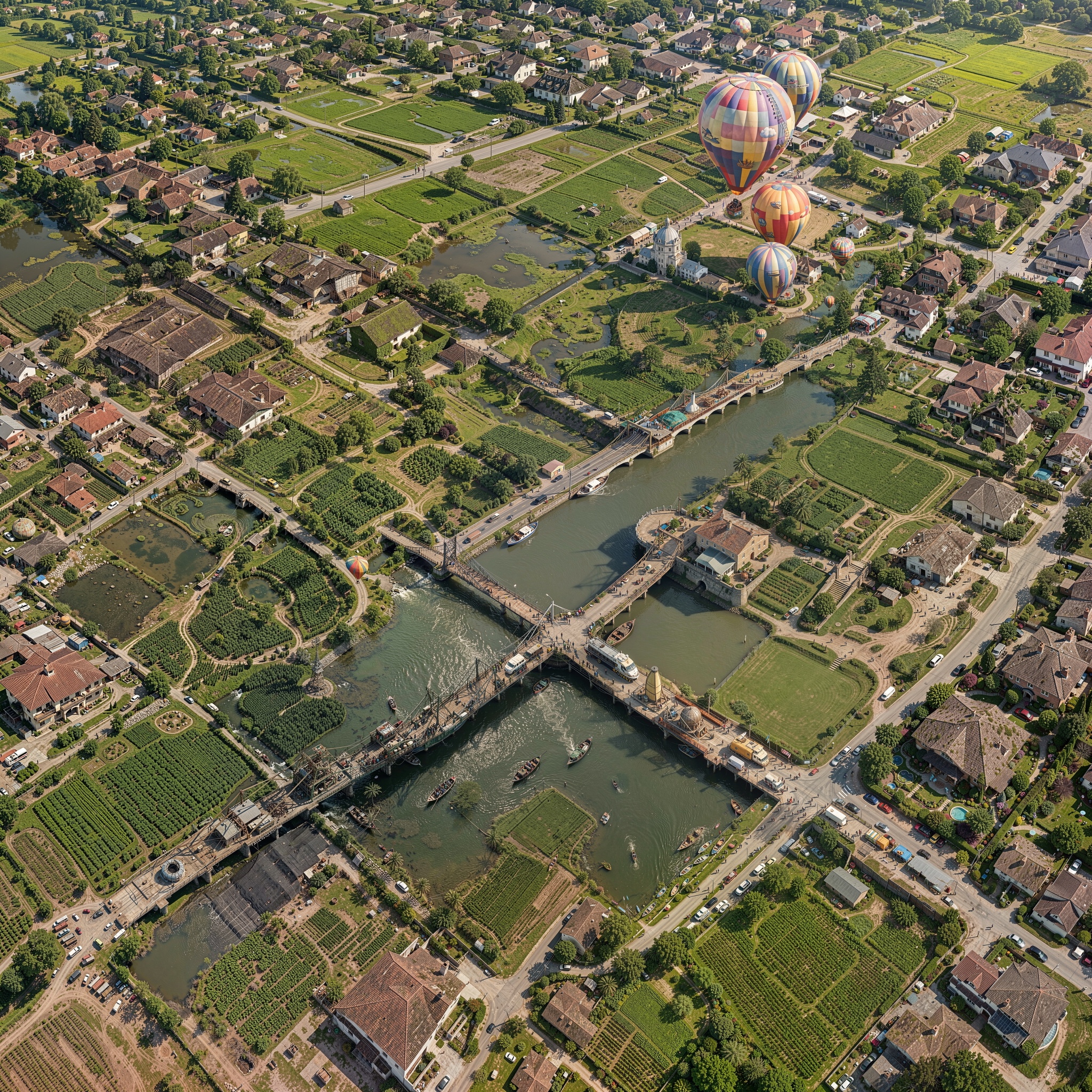
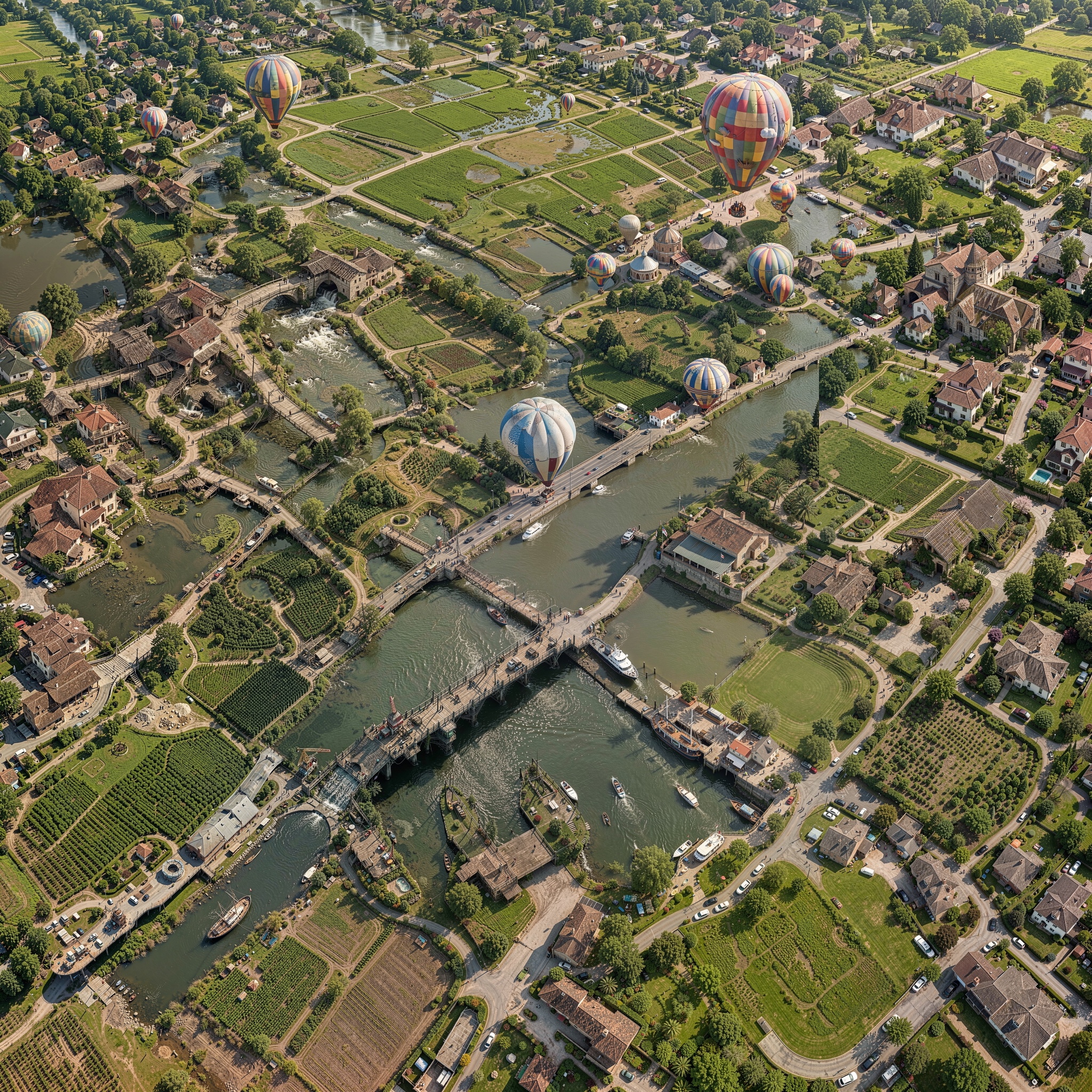
PromptAn aerial view reveals a flooded suburb reorganized by violin bridges, rice paddies, meteorological balloons, and concrete playground slides; the bridges guide boats between houses, paddies occupy former streets, and balloon shadows curve across the slides and water as a shared directional system.
α = 0
α = 0.25
α = 0.50
α = 0.75
α = 1.0
Complexity increases
Higher α progressively increases visible texture and local structure. α = 0.25 is the conservative default used in the main comparisons.
α sweep setup. FLUX.2 Klein-9B, four steps, 4096² output, 1024² windows, 512 px stride. The prompt, seed, detail prompt, and all sampling parameters are fixed; only constant α varies from 0 to 1.
Detail-Prompt Control
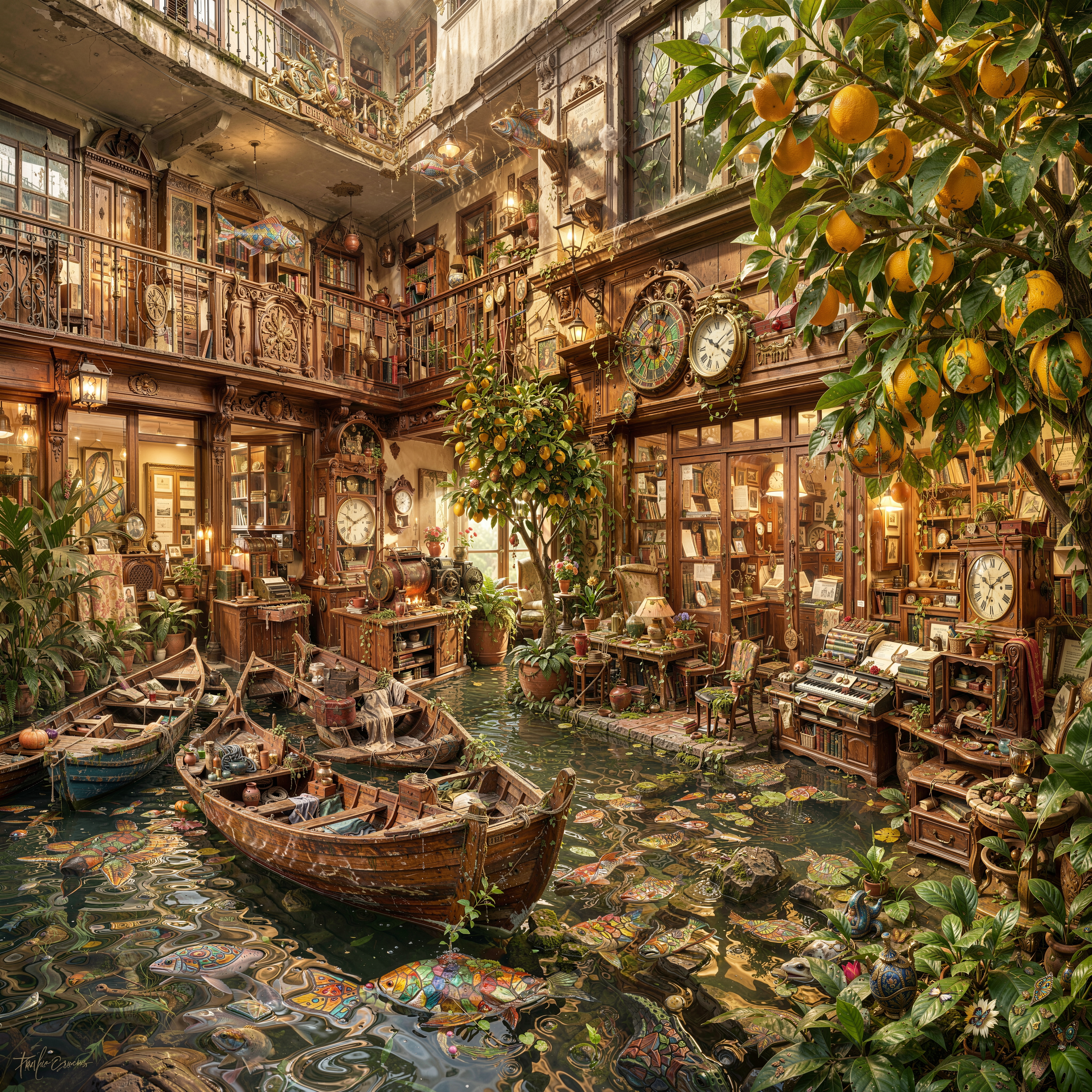
The global scene remains fixed while a second prompt changes how local content is rendered.
Master promptA flooded hotel atrium contains a functioning print shop with reed boats, mechanical clocks, stained-glass fish, and citrus trees; boats carry paper, clocks drive the presses, and fish-shaped light moves across the leaves.
“Enhance the image, add lots of details”
“Pointillist style”
“Add iridescent caustic light reflections”
“Intricate grotesque imagery”
Detail-prompt setup. FLUX.2 Klein-9B, four steps, 4096² output, 1024² windows, 512 px stride, and α = 0.25. The master prompt, seed, and sampling parameters are identical in all four images; only the detail prompt changes.
BibTeX
@inproceedings{
koroglu2026jolt,
title={{JoLT}: Joint Latent Trajectories for Context-Guided High-Resolution Tiled Generation},
author={Koroglu, Mathis and Jeanneret, Guillaume and Caselles-Dupr\'e, Hugo and Cord, Matthieu and Dapogny, Arnaud},
booktitle={The 4th AI for Visual Arts Workshop},
year={2026},
url={https://openreview.net/forum?id=9hGsmtZrCI}
}
Acknowledgements
This work has been partially supported by the VISA DEEP chair (grant ANR-20-CHIA-0022), the PostGenAI@Paris cluster (grant ANR-23-IACL-0007; France 2030), and funded by the French National Research Agency (ANR) under the Renaissance project (grant ANR-23-CE23-0023; France 2030).
This project was provided with computing HPC & AI and storage resources by GENCI at IDRIS thanks to grant 2025-AD011017131 on the supercomputer Jean Zay’s H100 partition.